OPERATIONS & REGULATIONS · CHAPTER 17
A hood cleaning quote comes back with four hoods on it. The operator counts five in the kitchen. The fifth is the one over the dish machine — and the question of whether it belongs on the quote, on the fire marshal’s checklist, and under NFPA 96 at all comes down to a distinction most operators have never had explained: Type 1 or Type 2.
October 15, 2026 · By Facilitec Southwest
QUICK ANSWER
A Type 1 hood is designed to collect and remove grease-laden vapors and smoke from cooking equipment — fryers, griddles, charbroilers, ranges, woks, and most ovens that cook meat. A Type 2 hood is designed to remove heat, steam, moisture, and odor from equipment that does not produce grease — dish machines, steam tables, some steamers and kettles, and bakery ovens that produce no grease. The terminology comes from the International Mechanical Code (IMC Section 507); NFPA 96 does not use the words “Type 1” and “Type 2” but applies to cooking equipment that produces grease-laden vapors — which is the same line. The practical rule: a Type 1 hood is a grease exhaust system and falls under NFPA 96 inspection and cleaning on the Table 12.4 cadence, with a listed fire-extinguishing system, grease-rated duct, and access panels. A Type 2 hood is a ventilation system and falls under general building maintenance and health code sanitation, not NFPA 96 cleaning. The quickest field check is the filters: a Type 1 hood has grease filters (baffles) across its face; a Type 2 hood usually has none, or a simple mesh.
NOT SURE WHICH HOODS YOU HAVE?
Facilitec Southwest surveys every hood in the kitchen on the first visit, identifies which systems fall under NFPA 96, and quotes exactly those — so you’re not paying for a dish hood or missing a grease hood.
See Our Kitchen Hood Cleaning Service →
1. Where the Terminology Comes From
The words “Type I” and “Type II” (usually written Type 1 and Type 2 in the field) come from the mechanical code, not the fire standard. The International Mechanical Code, adopted in some form by Texas, Oklahoma, Louisiana, New Mexico, and Arkansas, defines both in Chapter 2 and sets the requirements for each in Section 507, Commercial Kitchen Hoods.
In the IMC’s terms, a Type I hood is one designed for collecting and removing grease vapors and smoke. A Type II hood is one designed for collecting and removing steam, vapor, heat, odors, and products of combustion where grease is not present. The code requires a Type I hood over appliances that produce grease or smoke, and permits a Type II hood over appliances that produce only heat and moisture.
NFPA 96 approaches the same line from the other direction. Its scope statement, in Chapter 1, says the standard applies to cooking equipment that produces grease-laden vapors — or, in the shorthand most fire marshals use, to grease exhaust systems. It never says “Type I,” but every Type I hood is a grease exhaust system, and every grease exhaust system is what NFPA 96 governs. The two codes are describing the same equipment from two sides: the IMC says what hood you have to install, and NFPA 96 says how it has to be built, protected, inspected, and cleaned.
| TYPE 1 HOOD | ||
|---|---|---|
| Purpose | Collect and remove grease-laden vapors and smoke | Remove heat, steam, moisture, odor, and products of combustion |
| Appliances underneath | Fryers, griddles, charbroilers, ranges, woks, rotisseries, most ovens cooking meat, salamanders, tilt skillets | Dish machines, steam tables, some steamers and steam kettles, bakery and pizza ovens with no grease production, some combi ovens in steam-only service |
| Governing standards | IMC 507 for installation; NFPA 96 for construction, fire protection, inspection, and cleaning | IMC 507 for installation; general mechanical code and health code for maintenance |
| Grease filters | Required — listed baffle filters (or equivalent) across the face | Not required; may have mesh or none |
| Fire-extinguishing system | Required — listed system (UL 300 is the recognized test standard) | Not required |
| Duct | Grease duct — welded or listed, liquid-tight, enclosed or clearance-rated, with access panels | Standard HVAC-type duct |
| NFPA 96 inspection and cleaning | Yes — Table 12.4 cadence, Section 12.6.5 bare metal | No — but should be cleaned periodically for sanitation |
| Who the fire marshal asks about | Every one of them | Rarely, unless misidentified |
2. How to Tell Them Apart in the Kitchen
You can usually identify a hood’s type from the floor in under a minute. Work through the checks in order.
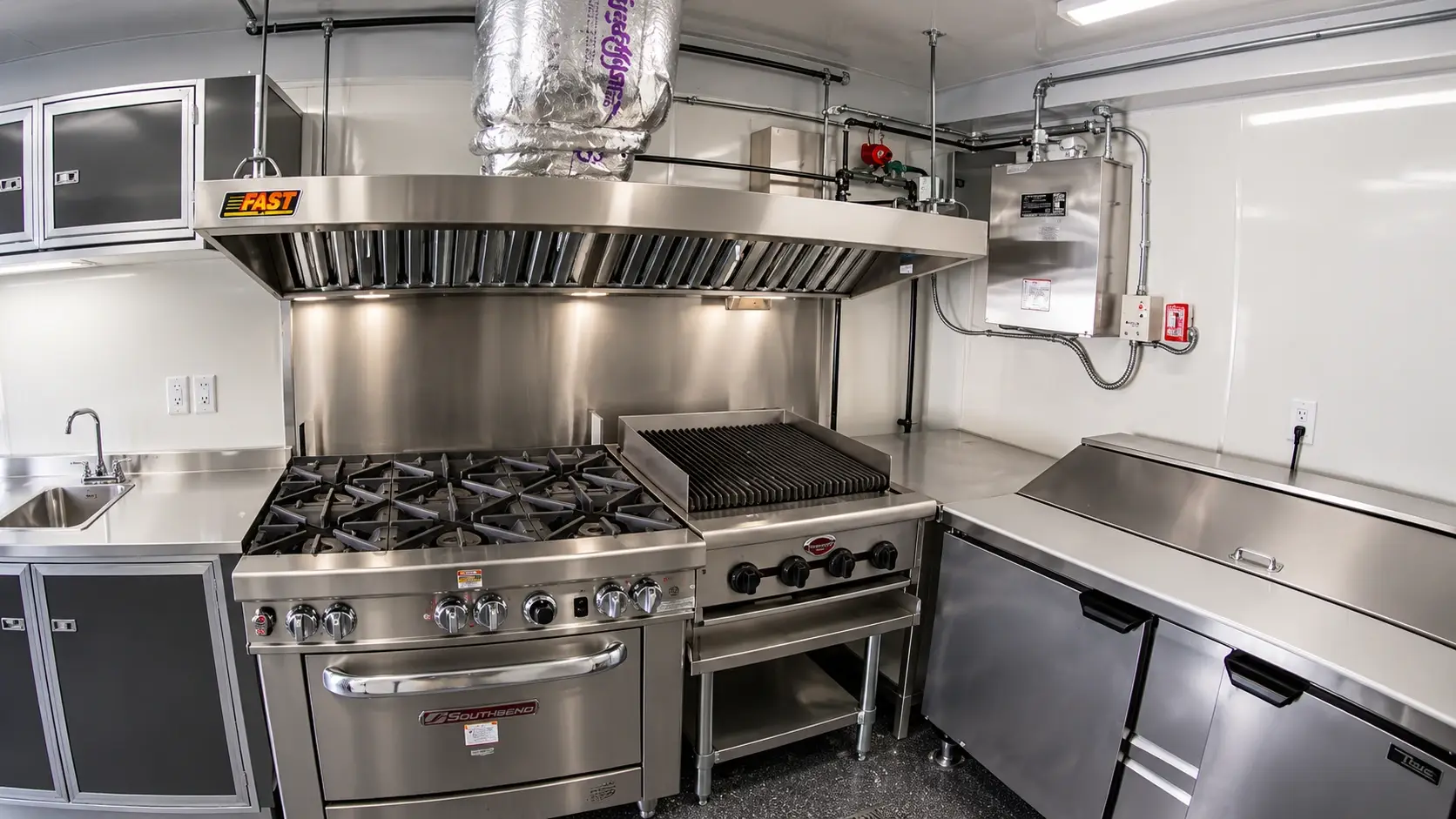
- Look at the filters. A Type 1 hood has a row of removable grease filters across its face — stainless baffle filters are standard in commercial kitchens. A Type 2 hood has no grease filters, or a thin mesh screen. If there are baffle filters, it’s Type 1.
- Look at what’s underneath. If the appliance fries, griddles, chars, sautés, roasts meat, or produces smoke, the hood over it is Type 1. If the appliance only produces steam or heat — a dish machine, a steam table, a steamer — the hood is Type 2.
- Look for suppression nozzles. A Type 1 hood has fire-extinguishing nozzles aimed at the appliances and up into the plenum and duct, with a manual pull station nearby. A Type 2 hood has none.
- Look for a grease cup or trough. Type 1 hoods have a grease collection trough behind the filters, often draining to a removable cup at one end. Type 2 hoods have a condensate drain or nothing.
- Look at the duct where it leaves the hood. Type 1 grease duct is welded steel or a listed grease duct, usually with a visible access panel. Type 2 duct looks like ordinary HVAC ductwork.
- Read the label. Listed hoods carry a UL 710 label (for Type 1) with the hood’s listing information. If the label is present and legible, it settles the question.
FIELD NOTE — THE CONVECTION OVEN QUESTION
The hood that generates the most disagreement is the one over a convection oven. The IMC classifies most ovens as light-duty appliances, and some codes allow a Type 2 hood over light-duty equipment that produces no grease. But a convection oven roasting chicken or bacon produces grease-laden vapor, and the fire marshal knows it. Our rule in the field is simple: if anything with fat goes into the oven, treat the hood over it as Type 1 and clean it on the NFPA 96 cadence. The cost of cleaning a Type 1 hood that might have passed as Type 2 is small. The cost of a Type 2 classification on a hood full of grease is a fire marshal citation at best.
3. Appliance Duty Classes and Why They Matter
The IMC and UL 710 sort cooking appliances into duty classes, and the duty class is what drives both the hood design and — indirectly — how fast the exhaust system loads with grease.
| Duty Class | Typical Appliances | Hood Type | Table 12.4 Tendency |
|---|---|---|---|
| Light-duty | Ovens (standard, convection, deck, conveyor), steamers, steam-jacketed kettles, cheesemelters, some ranges in light service | Type 1 unless the appliance is documented grease-free; Type 2 permitted in some cases for truly grease-free equipment | Semiannual or quarterly, depending on what’s cooked |
| Medium-duty | Fryers, griddles, ranges, pasta cookers, tilting skillets, rotisseries | Type 1 | Quarterly |
| Heavy-duty | Gas underfired broilers, charbroilers, electric and gas woks, upright broilers, salamanders | Type 1 | Monthly or quarterly |
| Extra-heavy-duty | Solid-fuel appliances — wood-fired ovens, charcoal grills, mesquite broilers, smokers | Type 1, with the additional requirements of NFPA 96 Chapter 14 | Monthly |
Duty class affects more than classification. A heavy-duty charbroiler under a Type 1 hood sends far more grease into the duct per hour than a medium-duty griddle, which is why NFPA 96 Table 12.4 puts charbroiling and wok cooking in the monthly inspection category and most other commercial cooking in the quarterly one. Our post on how often to clean a commercial kitchen exhaust system works through the full cadence table.
The 5 mg/m³ exception
The IMC includes an exception that lets an electric cooking appliance go without a Type 1 hood if an approved testing agency documents that the appliance’s effluent contains 5 milligrams per cubic meter or less of grease when tested at an exhaust rate of 500 cfm. This is how some electric combi ovens, electric conveyor ovens, and ventless cooking equipment are installed under a Type 2 hood or no hood at all. The documentation has to exist for the specific appliance; it’s not a judgment call, and it’s not transferable to a different model. If a kitchen is relying on this exception, the test documentation should be in the compliance file, because the fire marshal will ask.
4. What NFPA 96 Requires of a Type 1 Hood
Once a hood is Type 1, the full NFPA 96 picture applies to it and to everything downstream. The main obligations, with the chapters and sections that create them:
- Listed hood construction — Chapter 5. The hood is listed (UL 710) or built to the standard’s construction requirements, with liquid-tight seams and a grease collection provision.
- Grease removal devices — Chapter 6. Listed grease filters or extractors, sized and installed so vapors pass through them, with a minimum distance from the cooking surface. Our post on grease filter types covers the options.
- Grease duct — Chapter 7. Welded or listed duct, liquid-tight, with clearance to combustibles or a rated enclosure, pitched to drain, and with access panels for cleaning. Our post on the access panel rule explains the panel requirement.
- Exhaust fan — Chapter 8. A fan listed for grease exhaust, with the hinge kit and drain provisions of Section 8.1.1.1, discharging away from the roof surface and from air intakes. See our post on the exhaust fan hinge kit.
- Fire-extinguishing equipment — Chapter 10. A listed automatic system protecting the appliances, hood plenum, and duct, serviced semiannually per Chapter 11 and NFPA 17A. See fire suppression systems and NFPA 96.
- Inspection and cleaning — Chapter 12. Inspection on the Table 12.4 cadence by a properly trained, qualified, and certified person; cleaning to bare metal under Section 12.6.5 when the inspection finds grease at the Section 12.6.1.1 threshold; service label per 12.6.13; written report per 12.6.15.
None of this applies to a Type 2 hood. A Type 2 hood over a dish machine has no grease filters to inspect, no grease duct to clean to bare metal, no suppression system to tag. It still needs periodic cleaning — a dish hood accumulates mineral scale, lint, and biological growth from constant moisture, and the health inspector cares about that — but that’s sanitation maintenance, not NFPA 96 compliance.
THE CONTRACT RULE
Every Type 1 hood in the building should be on the NFPA 96 cleaning contract, with its own line on the written report. No Type 2 hood needs to be. A quote that lists fewer hoods than the kitchen has Type 1 hoods is a compliance gap. A quote that lists the dish hood as an NFPA 96 service is a billing question worth asking.
5. Where Misclassification Happens
In practice, the Type 1 / Type 2 line gets crossed in a handful of recurring ways.
- The menu changed. A hood installed as Type 2 over a bakery oven is now over an oven roasting pork shoulder. The hood didn’t change; the vapors did. The hood is now functionally a grease hood with no filters, no suppression, and no grease duct — and nobody has told the fire marshal or the cleaning contractor.
- The appliance moved. A fryer gets relocated under the hood that used to cover the steam table. Common in remodels and line reconfigurations. The hood over the fryer is now required to be Type 1, and it isn’t.
- A Type 1 hood is treated as Type 2 to save money. Usually the convection oven hood or the hood over a “warming” line that actually sautés. The contractor skips it, the quote is cheaper, and the fire marshal finds a grease-loaded hood with no service label.
- A Type 2 hood is quoted and billed as NFPA 96 service. Less dangerous, but the operator is paying for bare-metal cleaning and a service label on a dish hood that needs neither.
- The hoods were never surveyed. The cleaning contract was inherited from a previous operator or written over the phone, and nobody has walked the kitchen to count hoods and classify them.
The fix for all five is the same: a hood survey. Every hood in the building, identified by location, type, appliances underneath, duty class, and resulting Table 12.4 cadence, written into the compliance file and the cleaning contract. Our post on seven questions to ask a hood cleaning company includes whether the vendor surveys before quoting.
FIELD NOTE — THE HOOD NOBODY MENTIONED
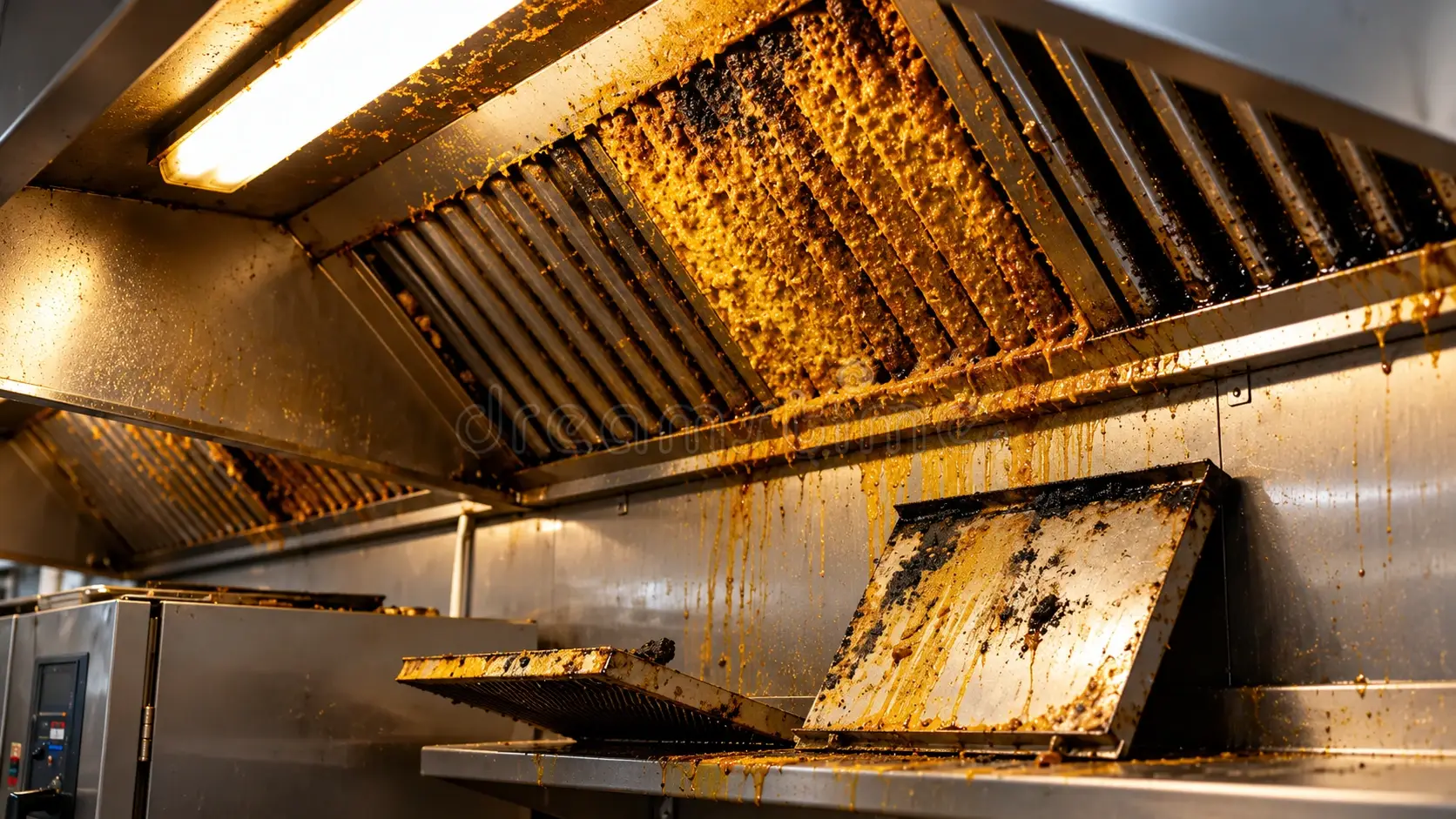
A hotel kitchen we surveyed had seven hoods on its cleaning contract and nine in the building. The two missing ones were over a pair of combi ovens in the banquet production area that the previous contractor had classified as Type 2 “steam hoods” when the kitchen opened. By the time we looked, the combi ovens had been roasting prime rib for banquets for six years. Both hoods had grease running down the interior walls and no filters to catch it. They went onto the contract as Type 1, got cleaned to bare metal, and the hotel’s engineering director added a line to the capital plan for suppression coverage. The fire marshal had walked past them on every inspection because they weren’t on the list.
6. The Hood Survey: What It Should Record
A hood survey is the one-time exercise that puts every exhaust system in the building on the right footing. It takes under an hour for most kitchens and should be part of every new cleaning contract and every ownership or menu change.
| For Each Hood, Record | Why It Matters |
|---|---|
| Location and identifier (e.g., “Hood 3 — main line, west end”) | Lets the written report, the fire marshal, and the operator refer to the same hood |
| Type 1 or Type 2 | Determines whether NFPA 96 applies |
| Appliances underneath and their duty class | Drives the Table 12.4 cadence and the suppression design |
| Grease filter type and count | Determines filter maintenance and whether filters are the operator’s or vendor’s responsibility |
| Suppression system present, manufacturer, last tag date | Confirms Chapter 10 protection exists and is current |
| Duct route, length, access panel locations | Establishes what “the entire system” means for Section 12.6.4 and what can be cleaned |
| Fan location, type, hinge kit present | Section 8.1.1.1 compliance; roof access planning |
| Resulting Table 12.4 cadence | Sets the inspection schedule for that hood |
| Last service label date | Baseline for the compliance file |
For multi-unit operators, the survey is the foundation of the portfolio file described in our post on multi-location kitchen compliance. Every location’s survey rolls up into one document that says how many Type 1 hoods the company has, on what cadences, and when each was last serviced.
SIGNATURE APPROACH
From Cooktop to Rooftop starts with knowing which cooktops have a grease hood over them. Our Phil Ackland Certified Technicians survey every hood on the first visit — Type 1 or Type 2, appliances, duty class, cadence — and the quote covers exactly the systems NFPA 96 covers. A Grease-Free and Fire-Safe kitchen means every grease hood is on the schedule, and no steam hood is paying for service it doesn’t need.
Frequently Asked Questions
What is the difference between a Type 1 and Type 2 hood?
A Type 1 hood collects and removes grease-laden vapors and smoke from cooking equipment such as fryers, griddles, charbroilers, ranges, and most ovens cooking meat. A Type 2 hood removes heat, steam, moisture, and odor from equipment that produces no grease, such as dish machines and steam tables. The terms come from the International Mechanical Code Section 507. Type 1 hoods have grease filters, a fire-extinguishing system, and grease-rated duct; Type 2 hoods have none of these.
Does NFPA 96 apply to Type 2 hoods?
No. NFPA 96 applies to cooking equipment that produces grease-laden vapors, which is the Type 1 category. A Type 2 hood over a dish machine or steam table is not a grease exhaust system and is not subject to NFPA 96 inspection, bare-metal cleaning, or service labeling. It should still be cleaned periodically for sanitation, which falls under the health code and general building maintenance.
Does a dishwasher hood need to be cleaned under NFPA 96?
No. A dish machine hood is a Type 2 hood handling steam and heat, not grease. It does not fall under NFPA 96 and does not need a service label or bare-metal cleaning. It does accumulate scale, lint, and moisture-related growth and should be cleaned on a sanitation schedule, but that is not an NFPA 96 service and should not be billed as one.
Does a convection oven need a Type 1 hood?
It depends on what’s cooked in it. The IMC classifies most ovens as light-duty, and some jurisdictions allow a Type 2 hood over an oven documented as grease-free. But an oven roasting meat or anything with fat produces grease-laden vapors and belongs under a Type 1 hood. The safe practice is to treat any oven that cooks fat-bearing food as Type 1 and clean its hood on the NFPA 96 cadence. Confirm the classification with your AHJ.
How can I tell if a hood is Type 1 by looking at it?
Check for grease filters — a row of removable stainless baffle filters across the face of the hood means Type 1. Look for fire-suppression nozzles aimed at the appliances and a manual pull station nearby. Look for a grease trough and cup behind the filters. Look for welded steel grease duct with an access panel where the duct leaves the hood. A UL 710 listing label confirms it. A Type 2 hood has none of these.
Does NFPA 96 use the terms Type I and Type II?
No. The Type I / Type II terminology is from the International Mechanical Code. NFPA 96 defines its scope as cooking equipment that produces grease-laden vapors, which corresponds to the equipment the IMC requires a Type I hood over. Fire marshals and contractors use the IMC terms as shorthand because they describe the same line.
What is the 5 mg/m³ exception?
An IMC exception that allows an electric cooking appliance to be installed without a Type 1 hood if an approved testing agency documents that its effluent contains 5 milligrams per cubic meter or less of grease at a 500 cfm exhaust rate. It applies only to the specific tested model, and the documentation must be available for the AHJ. Some electric combi ovens, conveyor ovens, and ventless equipment are installed under this exception.
What happens if a Type 2 hood is over an appliance that now produces grease?
The hood is now functionally a grease hood without the grease filters, suppression system, or grease duct NFPA 96 requires. This is a fire hazard and a code violation. The typical fix is replacing the hood with a listed Type 1 hood and adding suppression and grease duct, or relocating the grease-producing appliance under an existing Type 1 hood. The cleaning contractor should flag it, and the AHJ should be consulted.
Should my hood cleaning quote include every hood in the kitchen?
It should include every Type 1 hood — each with its own line on the written report. Type 2 hoods don’t need NFPA 96 service and shouldn’t be billed as such, though some operators ask the vendor to clean them for sanitation while on site. If your quote lists fewer hoods than you have Type 1 hoods, ask why. If it lists the dish hood as an NFPA 96 cleaning, ask about that too.
What is a hood survey and when should I get one?
A walk-through that records every hood in the building — location, Type 1 or Type 2, appliances and duty class underneath, filters, suppression, duct route and access panels, fan, and resulting Table 12.4 cadence. Get one at the start of any new cleaning contract, after any menu or line change that moves grease-producing equipment, and after any ownership or management change. It’s the foundation of the compliance file.
Does Facilitec Southwest clean Type 2 hoods?
Our NFPA 96 service covers Type 1 grease exhaust systems — hood, filters, duct, and fan — cleaned to bare metal with service label and written report. We survey every hood on the first visit and identify which are Type 1. Operators who want their Type 2 hoods cleaned for sanitation while we’re on site can add that as a separate line item; we don’t bill it as NFPA 96 service. See our kitchen hood cleaning service.
International Mechanical Code (IMC) — Chapter 2 (definitions of Type I and Type II hoods); Section 507 (Commercial Kitchen Hoods), including the Type I hood requirement for grease- and smoke-producing appliances, the Type II provisions for heat- and moisture-producing appliances, appliance duty classifications, and the 5 mg/m³ at 500 cfm exception for documented electric appliances. IMC edition and local amendments vary by state and city in TX, OK, LA, NM, and AR; confirm the adopted edition with your AHJ. NFPA 96, 2024 Edition — Chapter 1 (scope: cooking equipment producing grease-laden vapors); Chapter 5 (hoods); Chapter 6 (grease removal devices); Chapter 7 (exhaust duct systems); Chapter 8 (air movement), Section 8.1.1.1 (fan hinge kit); Chapter 10 (fire-extinguishing equipment); Chapter 11 (procedures for use, inspection, testing, and maintenance); Chapter 12, Section 12.6.1.1 (inspection), Table 12.4 (inspection frequency), Section 12.6.4 (accessibility), Section 12.6.5 (cleaning to bare metal), Section 12.6.13 (service label), Section 12.6.15 (written report); Chapter 14 (solid-fuel cooking). UL 710, Standard for Exhaust Hoods for Commercial Cooking Equipment. UL 300, Standard for Fire Testing of Fire Extinguishing Systems for Protection of Commercial Cooking Equipment. NFPA 17A, Standard for Wet Chemical Extinguishing Systems. Duty-class appliance examples follow IMC and UL 710 conventions; specific appliance classification is determined by the manufacturer’s listing and the AHJ. Hood type determinations for borderline appliances (ovens, combi ovens, steamers in mixed service) should be confirmed with the local mechanical and fire officials. Field Note describes a composite service situation; identifying details have been changed. Phil Ackland Certified Technicians follow NFPA 96 guidelines for cleaning and inspection of grease buildup. This article is a compliance reference, not legal, engineering, or AHJ-specific advice.