2026 NFPA 96 COMPLIANCE GUIDE
The short answer depends on what the kitchen is cooking — and the standard sets the inspection cadence, not the cleaning cadence. Here is the plain-English version, the distinction inside the rule, and what it means for a typical 2026 restaurant or facility kitchen.
June 05, 2026 · By Facilitec Southwest
For restaurant owners, facility managers, property managers, hotel and hospital food service directors, and multi-site operators running commercial kitchens, the question “how often does the hood need to be cleaned?” comes up over and over. The answer most operators have heard — “once a year,” “every six months,” “quarterly” — is half right. It points at the inspection schedule. It misses the cleaning trigger underneath it.
This guide is the 2026 plain-English walk-through of how often a commercial kitchen exhaust system must actually be inspected and cleaned under the national fire-safety standard, NFPA 96. It covers the four inspection tiers by cooking type, the three grease-depth thresholds that trigger an actual cleaning, why operational reality in most high-volume kitchens collapses the two schedules into one, and the related maintenance cadences (fire suppression, cooking equipment, grease drip containers) that round out the standard. The full text of the cited sections is available on our NFPA 96 Codes reference page.
QUICK DEFINITIONS, BEFORE WE GO FURTHER
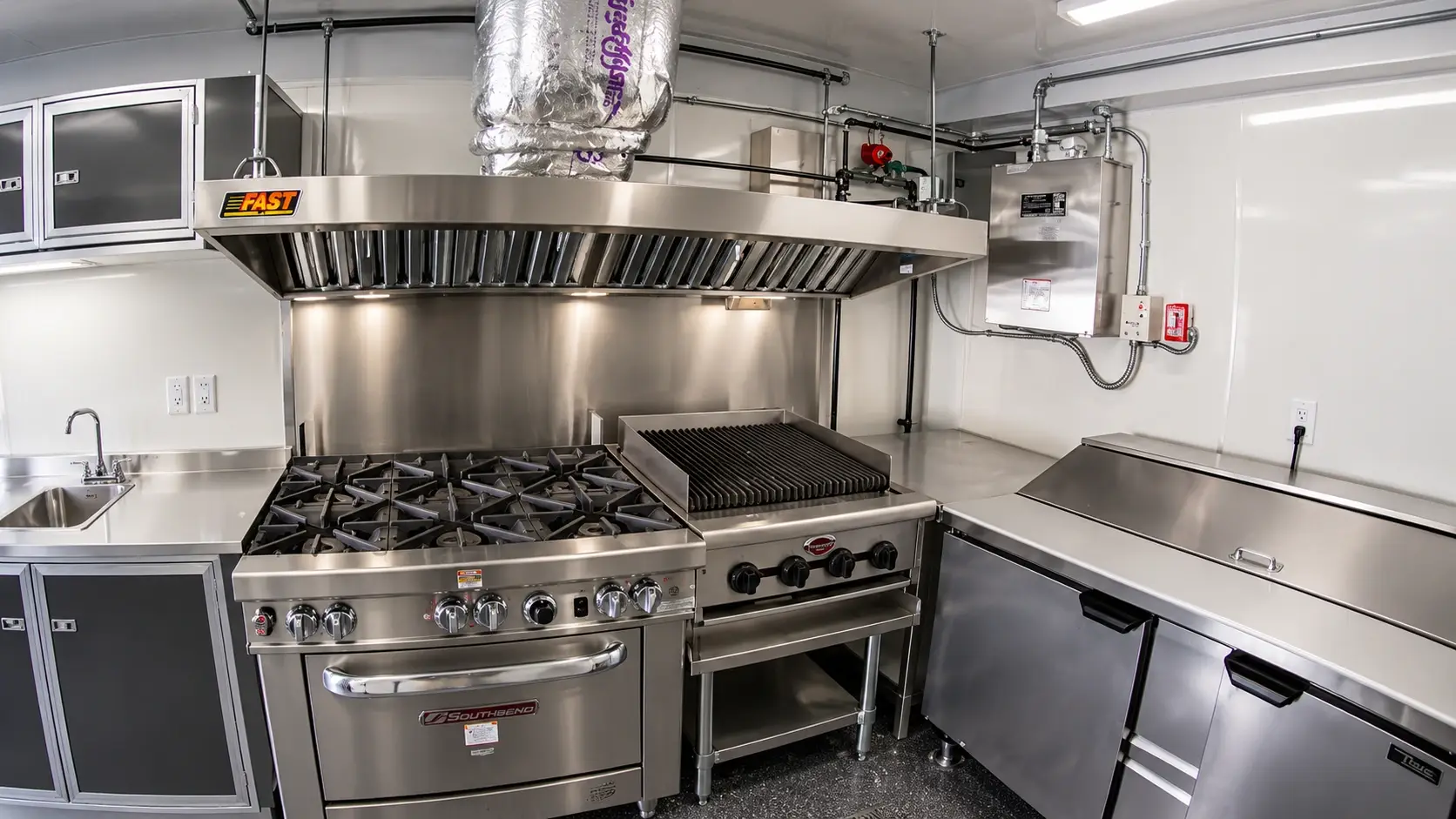
NFPA 96 is the National Fire Protection Association’s rulebook for commercial cooking hoods, ducts, and exhaust fans. The current edition is the 2024 edition, in force throughout 2026. Exhaust system means the entire path that pulls cooking smoke and grease out of the kitchen — the hood over the cookline, the filters inside the hood, the ductwork running through the wall or ceiling, and the fan on the roof. Inspection is when a properly trained, qualified, and certified person measures how much grease has built up. Cleaning is when the technician removes it. The two are deliberately separated in the standard.
The Short Answer (and the Catch)
Here is the short answer to “how often does my kitchen exhaust system need to be cleaned?”:
- Solid-fuel cooking (BBQ smokehouses, wood-fire pizza ovens, charcoal grills): monthly
- High-volume cooking (twenty-four-hour kitchens, charbroiling operations, wok cooking): quarterly (every three months)
- Moderate-volume cooking (most standard sit-down restaurants): semiannually (every six months)
- Low-volume cooking (churches, day camps, seasonal businesses, senior centers): annually
Here is the distinction worth knowing: those cadences come from NFPA 96’s inspection schedule — not from a cleaning schedule. NFPA 96 does not set a cleaning schedule at all. It sets an inspection schedule in Table 12.4 and a cleaning trigger in Section 12.6.1.1. Cleaning is required under Section 12.6 only when the inspection finds enough grease to demand it.
In a high-volume kitchen, the inspection almost always finds enough grease at the inspection cadence — so the inspection visit and the cleaning visit usually happen back to back. In a low-volume kitchen, the inspection sometimes finds the system still clean enough that no cleaning is required that cycle. Knowing the difference matters for budgeting, for documentation, and for what to tell a fire marshal or insurance underwriter who asks about the schedule. The companion guide on what an insurance carrier wants to see in a hood cleaning file covers how the inspection-versus-cleaning distinction plays out on the documentation side.
The Inspection Schedule: NFPA 96, Table 12.4
The inspection cadence lives in a single table inside NFPA 96 — Table 12.4, the inspection schedule. It sorts every commercial kitchen into one of four cooking-type buckets, with one inspection frequency for each.
| COOKING OPERATION | INSPECTION FREQUENCY | TYPICAL EXAMPLES |
|---|---|---|
| Solid-fuel cooking | Monthly | BBQ smokehouses, wood-fire pizza ovens, charcoal grills |
| High-volume cooking | Quarterly (every three months) | 24-hour kitchens, charbroiling, wok cooking |
| Moderate-volume cooking | Semiannually (every six months) | Most standard sit-down restaurants |
| Low-volume cooking | Annually | Churches, day camps, seasonal businesses, senior centers |
The “high-volume” and “low-volume” tiers come with NFPA 96’s own examples directly under the table. High-volume is explicitly defined to include 24-hour cooking, charbroiling, and wok cooking. Low-volume is explicitly defined to include churches, day camps, seasonal businesses, and senior centers. If your kitchen doesn’t match those examples, you’re probably in the moderate-volume bucket.
One important note: this is the inspection schedule. Whoever does the inspection has to be a “properly trained, qualified, and certified” person accepted by the local fire marshal — that’s NFPA 96’s qualified-person rule for inspection (Section 12.4). The two certifications most fire marshals recognize are IKECA’s Certified Exhaust Cleaning Inspector and Phil Ackland Training.
The Cleaning Trigger: NFPA 96, Section 12.6.1.1
Once an inspection happens, the cleaning question gets answered by looking at how much grease is on the surfaces inside the system. NFPA 96 sets three grease-depth limits, one for each kind of surface. Cross any one of them and a cleaning is required.
| WHERE THE GREASE IS | THE LIMIT BEFORE CLEANING IS REQUIRED | A VISUAL ANALOGY |
|---|---|---|
| Hoods, grease removal devices (filters), fans, ducts | 0.002 inches (50 micrometers) | About the thickness of a single sheet of copy paper |
| Other surfaces inside the system | 0.078 inches (2 millimeters) | About the thickness of a US nickel |
| Fan housings | 0.125 inches (one-eighth of an inch) | About the thickness of two US dimes stacked |
The three limits live in NFPA 96, Sections 12.6.1.1.1, 12.6.1.1.3, and 12.6.1.1.4. Together they’re the grease-depth thresholds — the trigger mechanism that makes cleaning required.
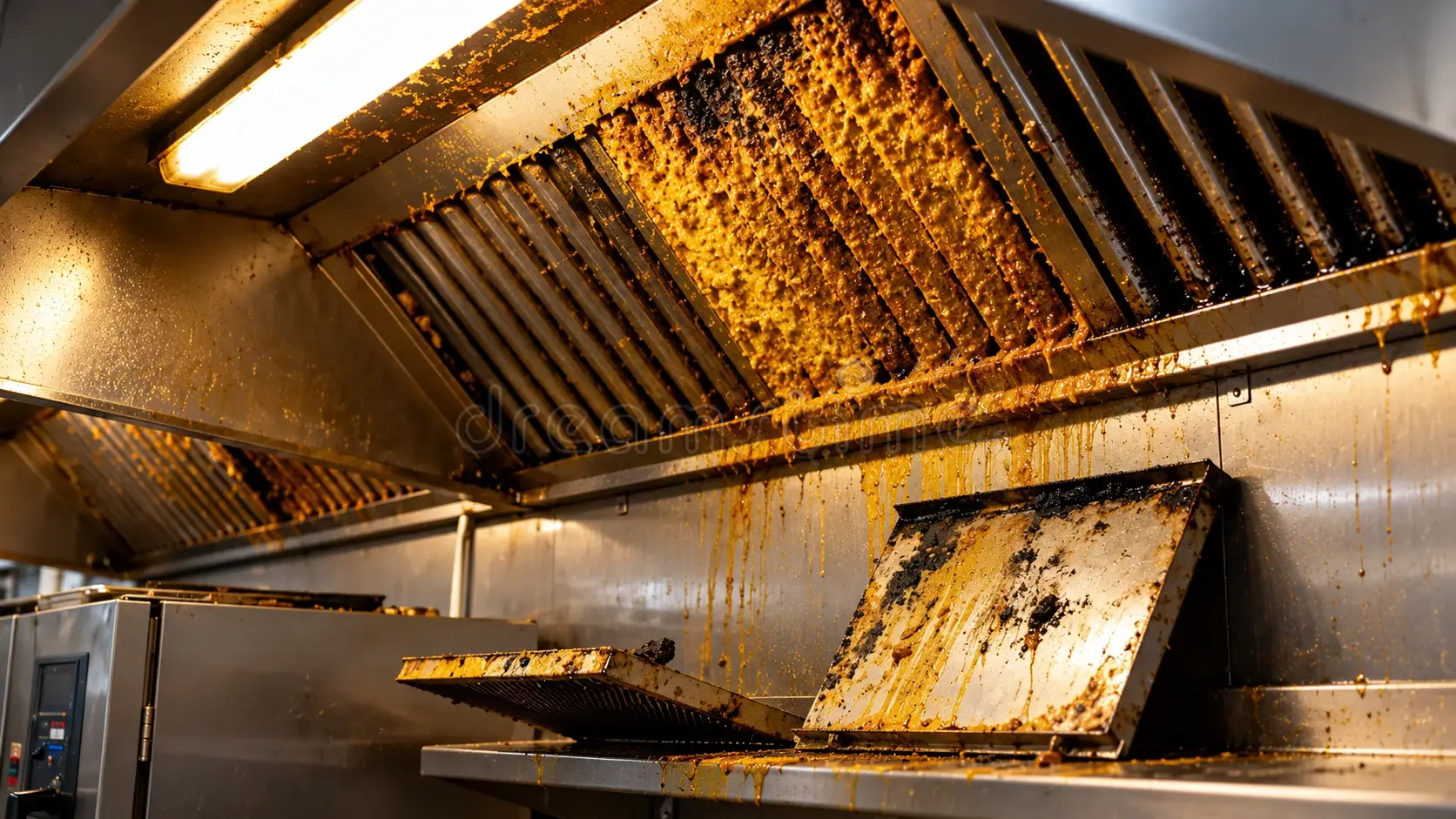
The first one matters most for the typical kitchen. A paper-thin grease film on a hood, filter, fan, or duct surface is enough to demand a cleaning. That’s a much tighter limit than most operators realize. The “one-eighth of an inch” number sometimes quoted in industry discussion is actually only the fan-housing limit — not the universal rule.
NFPA 96 also adds a separate clean-before-it-gets-bad rule (Section 12.6.2): hoods, grease removal devices, fans, ducts, and other appurtenances shall be cleaned to remove combustible contaminants before surfaces become heavily contaminated with grease or oily sludge. The threshold-based trigger above is the formal rule. The clean-before-it-gets-bad rule is the spirit behind it.
FIELD NOTE
Across hundreds of inspections Facilitec Southwest has performed across the Southwest, the most common reason a kitchen ends up with a heavier-than-expected cleaning is not the volume of cooking — it is the condition of the grease filters between inspections. Filters that are not cleaned daily or weekly by the kitchen staff stop catching grease, which sends raw grease into the ductwork between professional visits and accelerates how quickly the inspection finds threshold-crossing accumulation. The kitchens that consistently pass quarterly inspections without a heavy cleaning behind them are the kitchens whose staff handles the filter cleaning on schedule.
Why the Inspection Cadence Is Effectively the Cleaning Cadence in Most Kitchens
Here’s the operational truth that NFPA 96 doesn’t say out loud but every certified hood cleaner knows: in most high-volume kitchens, the grease builds up fast enough that the inspection cycle and the cleaning cycle become the same visit.
A 24-hour hospital cafeteria with charbroilers and fryers running through three meal services a day will cross the 0.002-inch threshold on its hood, filters, and ducts within weeks. By the time the quarterly inspection happens, the cleaning is almost always required. The same is true of a chain steakhouse with charbroiling stations, a Vietnamese restaurant with active wok cooking, or a 24-hour diner.
Solid-fuel cooking — BBQ, wood-fire, charcoal — accumulates even faster because creosote and ash combine with the grease. That’s why the inspection cadence for solid fuel is tightened all the way to monthly.
At the other end of the spectrum, a church kitchen used only for Wednesday-night meals or a senior center kitchen that serves one lunch per day can pass an annual inspection without crossing the depth thresholds. In those cases, a cleaning may not be technically required at every inspection cycle — but the kitchen still gets a written report documenting that fact, which goes on file for the fire marshal and the insurance carrier.
A PRACTICAL RULE OF THE THUMB
If your kitchen falls into NFPA 96’s solid-fuel or high-volume tier, plan and budget for a cleaning at every inspection cycle. The chance the system stays under the 0.002-inch limit between visits is small. If your kitchen is moderate- or low-volume, budget for the inspection at the required cadence and treat the cleaning as triggered by the report.
The Documentation Side of the Schedule
Every time an inspection or a cleaning happens, NFPA 96 requires three pieces of documentation. None of them is optional. Our companion guide on what belongs in a real NFPA 96 cleaning report and what the service label should say walks through each requirement in detail.
- A service sticker affixed to the hood — date of service shown by a perforation, technician’s name, and the company’s contact information. It stays on the hood until the next visit. That’s the hood-label rule (NFPA 96, Section 12.6.13).
- A written report to the kitchen owner within two weeks of the inspection. That’s the two-week inspection report rule (Section 12.6.14).
- If cleaning was performed, a separate written report to the kitchen owner within two weeks of the cleaning. That’s the two-week cleaning report rule (Section 12.6.15).
The cadence matters because fire marshals and insurance carriers don’t measure compliance by visit count alone. They measure by paper trail. A clean kitchen with no documentation looks like a non-compliant one. A maintained kitchen with current stickers, recent reports, and a schedule that matches the cooking volume is what reasonable care looks like in 2026.
The Other Maintenance Cadences NFPA 96 Sets
Beyond the inspection-and-cleaning cycle, NFPA 96 sets three other recurring requirements that round out the standard. Operators sometimes miss these because they live in different parts of the code and they involve different vendors.
Fire suppression system — at least every six months
The wet-chemical fire suppression system inside the hood — the one designed to spray a fire-quenching agent at the cooking line if a flare-up happens — has to be inspected and tested by a properly trained, qualified, and certified person at least every six months. That’s the suppression-maintenance rule (Section 12.2.1). Fusible links (the metal-alloy parts that trigger the system at a set temperature) have to be replaced at least once a year. This work comes from a licensed fire suppression contractor, not the hood cleaning company.
Cooking equipment — at least annually
The cooking equipment itself — fryers, charbroilers, ranges, griddles — has to be inspected and serviced at least once a year by properly trained and qualified persons (Section 12.7.1). The hood cleaning company will sometimes flag obvious issues during their visit, but full equipment service is a separate cycle.
Grease drip containers — at least weekly
The metal containers used to collect grease drippings — under fryers, on the roof at the exhaust fan discharge, anywhere grease pools — have to be inspected or emptied at least once a week (Section 12.6.17). This is usually a kitchen staff task rather than a contractor task, but if a grease container is missed, the kitchen will be cited at the next fire marshal inspection.
How to Set the Right Cadence for Your Kitchen in 2026
A clean way to set the cadence in 2026 is to walk through four steps in order.
- Identify the cooking tier. Is this kitchen solid-fuel, high-volume, moderate-volume, or low-volume under Table 12.4? Match against the examples NFPA 96 gives directly under the table.
- Set the inspection cadence to the table. Monthly, quarterly, semiannually, or annually. That’s the minimum the standard expects.
- Decide whether to schedule cleaning at every inspection or treat it as triggered. For solid-fuel and high-volume kitchens, scheduling cleaning at every inspection is the realistic plan. For moderate- and low-volume kitchens, the cleaning can be treated as triggered by the Section 12.6.1.1 thresholds — but the inspection still has to produce a written report either way.
- Layer in the related cadences. Fire suppression every six months. Cooking equipment annually. Grease drip containers weekly. Build all of these into your facility calendar at the same time.
For multi-site operators — restaurant groups, hotel portfolios, hospital systems, school districts, casino properties — staggering the cycles across sites keeps any one month from getting overwhelmed and makes the documentation easier to track. A recurring Maintenance Program handles that staggering automatically and consolidates the documentation into one file the broker, the underwriter, and the marshal can read in a single sitting.
How Facilitec Southwest Sets the Cadence with Our Customers
Facilitec Southwest has served commercial cooking establishments across Texas, Oklahoma, Louisiana, New Mexico, and Arkansas since 1986. When we set up a new customer, we walk through the same four-step process above. The cooking tier is identified. The inspection cadence is set to match. For high-volume and solid-fuel kitchens, cleaning is scheduled at every inspection visit. For moderate- and low-volume kitchens, the inspection produces the written report, and the cleaning is triggered when the grease depth crosses the limits.
Every kitchen hood cleaning visit closes with the service label on the hood per Section 12.6.13, service tags at any access panels that were opened per Section 12.6.10, and the written report to the equipment owner inside the two-week window the standard requires. For multi-site portfolios, our NFPA Compliance Services consolidate the schedule and the documentation across every location. Facilitec Southwest follows NFPA 96 guidelines for cleaning and inspection of grease buildup. From cooktop to rooftop, clean to bare metal. The outcome is a grease-free, fire-safe facility and the peace of mind that comes with it.
Frequently Asked Questions
How often should a commercial kitchen exhaust system be cleaned?
It depends on what the kitchen cooks. NFPA 96 sets an inspection schedule by cooking volume — monthly for solid-fuel, quarterly for high-volume (24-hour, charbroil, wok), semiannually for moderate-volume, annually for low-volume (churches, day camps, senior centers). Cleaning is required whenever the inspection finds grease over the depth limits (0.002 inches on hoods, filters, fans, ducts). In high-volume kitchens, the cleaning ends up happening at the inspection cadence.
Does NFPA 96 set a cleaning schedule?
No — and this is where most people get confused. NFPA 96 sets an inspection schedule (Table 12.4) and a cleaning trigger (the depth thresholds in Section 12.6.1.1). The cleaning is required when the inspection finds enough grease to cross the trigger.
What does NFPA 96, Table 12.4, require in 2026?
Table 12.4 of the 2024 edition (the current edition in 2026) sets four inspection cadences: monthly for solid fuel, quarterly for high-volume (24-hour, charbroil, wok), semiannually for moderate-volume, annually for low-volume (churches, day camps, seasonal businesses, senior centers).
At what grease thickness does NFPA 96 require cleaning?
Three limits, depending on the surface. 0.002 inches (50 micrometers — about copy-paper thickness) on hoods, filters, fans, and ducts (Section 12.6.1.1.1). 0.078 inches (about two millimeters) on other surfaces (Section 12.6.1.1.3). 0.125 inches (one-eighth of an inch) on fan housings (Section 12.6.1.1.4). Any threshold crossed during inspection requires cleaning under Section 12.6.
What other commercial kitchen maintenance does NFPA 96 require?
Three other recurring requirements. The fire suppression system on the hood — inspected and serviced at least every six months by a qualified contractor (the suppression-maintenance rule, Section 12.2.1). Cooking equipment — inspected and serviced at least annually (Section 12.7.1). Grease drip containers — inspected or emptied at least weekly (Section 12.6.17).
Who can perform the inspection and cleaning?
Both must be performed by a “properly trained, qualified, and certified” person accepted by the local fire marshal — Section 12.4 for inspection, Section 12.6.1 for cleaning. The two credentials most fire marshals across the Southwest recognize are IKECA’s Certified Exhaust Cleaning Specialist (CECS) and Phil Ackland Training.
Sources: NFPA 96, 2024 Edition — Section 12.2.1 (suppression-maintenance rule); Section 12.4 (qualified-person rule for inspection); Table 12.4 (inspection schedule); Section 12.6 (cleaning of exhaust systems); Section 12.6.1 (qualified-person rule for cleaning); Section 12.6.1.1, 12.6.1.1.1, 12.6.1.1.3, 12.6.1.1.4 (grease-depth thresholds); Section 12.6.2 (clean before heavy contamination); Section 12.6.10 (access-panel service tag); Section 12.6.13 (hood-label rule); Section 12.6.14 (two-week inspection report rule); Section 12.6.15 (two-week cleaning report rule); Section 12.6.17 (grease drip container weekly inspection); Section 12.7.1 (cooking equipment annual inspection). We follow NFPA 96 guidelines for cleaning and inspection of grease buildup.