OPERATIONS & REGULATIONS · CHAPTER 14
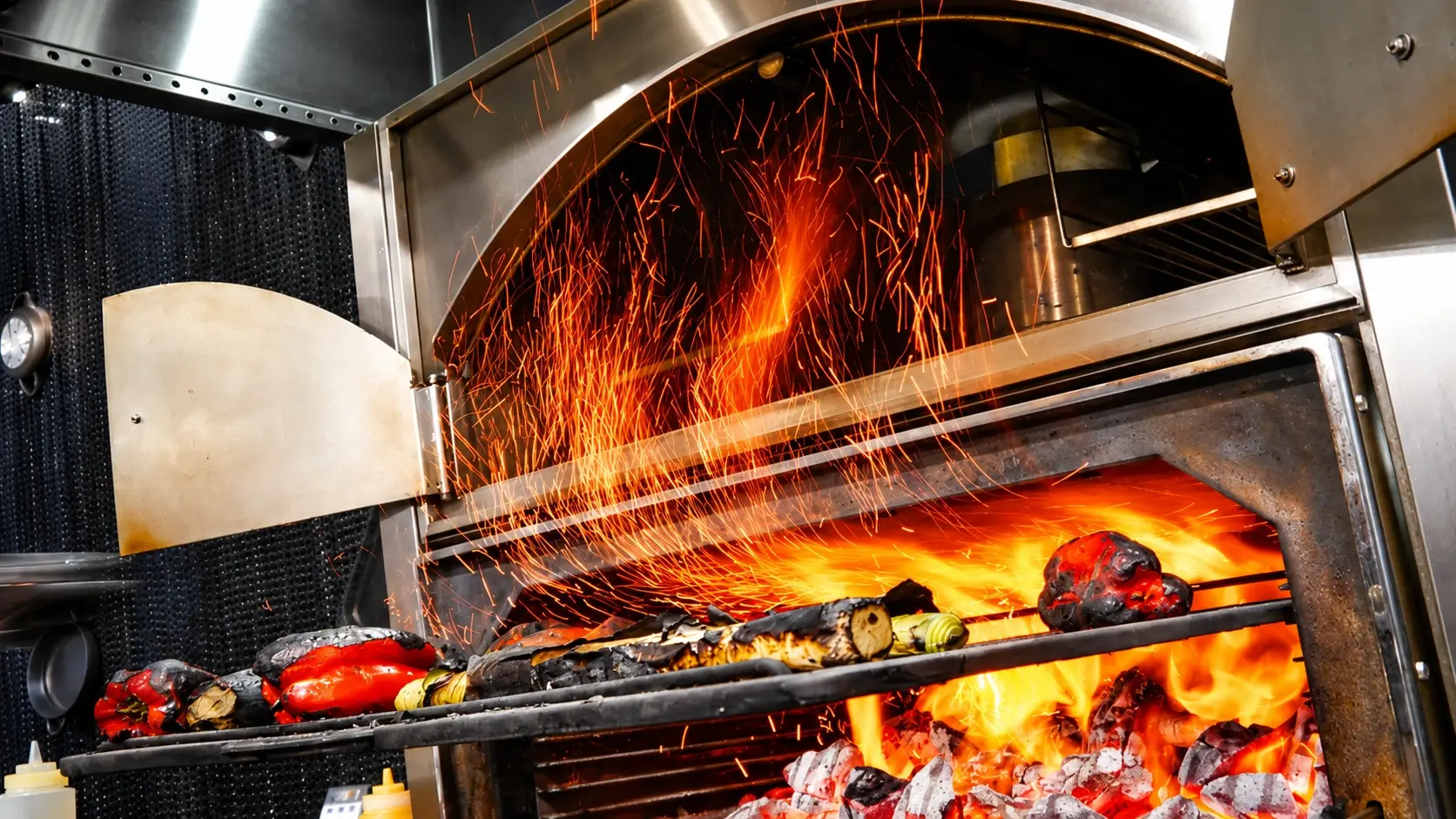
A post-oak pit in Lockhart, a wood-fired oven in Santa Fe, a mesquite grill in San Antonio, a charcoal char-broiler in a Lafayette steakhouse — every one of them burns something that produces embers, and embers travel. NFPA 96 gives solid-fuel cooking its own chapter for that reason. The rules are stricter than the rest of the standard, the inspection cadence is the tightest in Table 12.4, and most operators running wood or charcoal have never read them.
October 1, 2026 · By Facilitec Southwest
QUICK ANSWER
NFPA 96 Chapter 14 governs any commercial cooking that burns wood, charcoal, briquettes, or pellets as the primary or supplemental fuel. It adds requirements on top of the rest of the standard: a spark arrestor in the exhaust path to stop embers before they reach the duct and fan, a dedicated exhaust system (or specific listed provisions) separate from gas or electric appliances, fuel storage rules, ash and ember disposal in a closed metal container, and a fire-extinguishing approach suited to burning solids. Solid-fuel operations sit in the monthly inspection row of Table 12.4 — the tightest cadence in the standard — because creosote and grease together build a fuel load faster than grease alone and ignite from a single ember. Texas barbecue, wood-fired pizza, Argentine and mesquite grills, charcoal char-broilers, and pellet smokers all fall under Chapter 14.
SOLID-FUEL EXHAUST SERVICE
Facilitec Southwest cleans solid-fuel exhaust systems on the monthly Table 12.4 cadence — spark arrestor, hood, duct, and fan — and documents creosote and grease removal to bare metal.
See Our Kitchen Hood Cleaning Service →
1. Why Solid Fuel Gets Its Own Chapter
Gas and electric cooking produce grease-laden vapor. Solid-fuel cooking produces grease-laden vapor plus three things gas and electric don’t.
Embers
Wood and charcoal throw sparks and lifted embers into the exhaust airstream. A gas flame doesn’t. An ember that reaches a grease-coated duct is an ignition source arriving at the fuel. This is the single reason Chapter 14 exists — everything else in the chapter follows from it.
Creosote
Incomplete combustion of wood deposits creosote — a tar-like, highly flammable residue — on every surface the smoke touches. Creosote and grease together form a layered deposit that ignites at lower temperatures and burns hotter than grease alone. Chimney fires in residential wood stoves are creosote fires; the same chemistry applies in a barbecue pit’s exhaust.
Ash
Solid fuel leaves ash, and ash holds heat. Ash that looks cold can contain embers for hours. Chapter 14 addresses how ash is removed and stored because ash in a plastic bin or a cardboard box is a fire that hasn’t started yet.
Gas and electric kitchens manage one fuel load — grease — with one ignition risk — a cookline flare-up. Solid-fuel kitchens manage two fuel loads with a continuous supply of ignition sources traveling through the system. The rest of NFPA 96 wasn’t written for that, so Chapter 14 was.
THE CORE DIFFERENCE
In a gas kitchen, the fire has to reach the grease. In a wood kitchen, the system is constantly delivering the fire to the grease. Chapter 14 is about intercepting it.
2. What Counts as Solid-Fuel Cooking
Chapter 14 applies whenever a solid fuel is burned as part of the cooking process — as the primary heat source or as a supplement to gas for flavor. The category is broader than most operators assume.
| COOKING OPERATION | FUEL | CHAPTER 14 APPLIES? |
|---|---|---|
| Barbecue pit (offset, direct-heat, rotisserie) | Post oak, mesquite, hickory, pecan | Yes |
| Wood-fired pizza oven | Hardwood | Yes |
| Argentine / Santa Maria grill | Wood or lump charcoal | Yes |
| Charcoal char-broiler | Lump charcoal or briquettes | Yes |
| Pellet smoker | Compressed wood pellets | Yes |
| Hibachi / yakitori (binchotan) | Japanese charcoal | Yes |
| Tandoor (charcoal-fired) | Charcoal | Yes |
| Gas grill with wood chips or chunks in a smoker box | Gas + supplemental wood | Yes — supplemental solid fuel triggers Chapter 14 |
| Gas char-broiler with ceramic briquettes | Gas only; briquettes are inert radiants | No |
| Electric smoker with liquid smoke | Electric | No |
The line is combustion. If something in the cooking chamber is burning that isn’t gas or electricity, Chapter 14 applies. Gas appliances that add wood chips for flavor are the most commonly missed case — the operator thinks of it as a gas grill, the fire marshal sees the embers.
3. What Chapter 14 Requires
Chapter 14 adds six requirement categories on top of the rest of NFPA 96. Every one of them exists because of embers, creosote, or ash.
Spark arrestor
A device in the exhaust path that intercepts embers before they reach the duct. Typically a listed mesh screen or a baffle assembly installed at the hood or at the duct inlet. The spark arrestor is the single most important Chapter 14 component and the one most often missing on retrofitted or improvised solid-fuel installations. It also loads with creosote faster than any other surface in the system — which is why it needs monthly attention.
Dedicated exhaust system
Chapter 14 generally requires solid-fuel appliances to be served by their own exhaust system, separate from the hoods and ducts serving gas and electric appliances. The reason is straightforward: an ember from the pit shouldn’t have a path into the fryer hood’s grease-loaded duct. Where a shared system is used, the standard imposes additional listing and protection conditions. Most new construction separates them; many older kitchens don’t, and that’s a design deficiency the fire marshal will flag.
Duct construction and cleaning access
The Chapter 7 duct construction rules apply, and Chapter 14 reinforces them — the duct carrying wood smoke needs the same welded, liquid-tight construction, and it needs more access panels, not fewer, because creosote deposits are harder to reach and remove than grease. See our post on the NFPA 96 access panel rule.
Fire-extinguishing system suited to solid fuel
Wet-chemical suppression is designed for grease fires on gas and electric appliances. Solid-fuel cooking has a burning fuel bed that wet chemical doesn’t fully address. Chapter 14 requires the extinguishing approach to account for the fuel bed — commonly a water-based or dual-agent system, or a listed system specifically approved for the solid-fuel appliance. The suppression contractor designs this; the cleaning vendor’s job is to keep it clear of creosote. Our post on fire suppression systems and NFPA 96 covers the general case.
Fuel storage
Wood, charcoal, and pellets stored inside the building are a fuel load sitting near an ignition source. Chapter 14 limits how much can be stored near the appliance, requires separation from the cooking operation, and addresses the containers. A cord of post oak stacked against the pit is a Chapter 14 deficiency.
Ash and ember disposal
Ash must be removed to a closed metal container with a tight-fitting lid, placed on a noncombustible surface, away from combustibles, and never mixed with grease or paper waste. Ash that goes into a dumpster with cardboard is the origin of a meaningful share of restaurant fires that start outside the building.
FIELD NOTE — THE SCREEN NOBODY CLEANS
On a monthly solid-fuel service, the spark arrestor is where the technician starts. On a pit that’s been running hard, the screen is coated in creosote thick enough that it’s half-blocked — which does two things at once: it reduces exhaust flow so the kitchen fills with smoke, and it turns the one component designed to stop embers into a creosote-coated surface waiting for one. Operators sometimes pull the screen out entirely to fix the airflow problem. That removes the airflow problem and the ember protection together. The fix is cleaning it monthly, not removing it.
4. The Monthly Cadence — Why Table 12.4 Puts Solid Fuel First
Table 12.4 sets inspection frequency by cooking type. Solid-fuel operations sit in the first row: monthly. The same row as 24-hour operations, and tighter than high-volume gas kitchens at quarterly.
Three reasons the standard puts a wood-fired pizza oven on the same cadence as a hospital kitchen that never closes:
- Creosote builds faster than grease. Every hour of wood combustion deposits creosote on the hood, spark arrestor, and duct. Combined with grease from the food, the layered deposit reaches a fire-supporting thickness in weeks, not months.
- The ignition source is continuous. A gas kitchen needs a flare-up to start a duct fire. A solid-fuel kitchen sends embers into the system every service. The interval between “fuel load is present” and “ignition arrives” is shorter.
- The spark arrestor needs it. A creosote-blocked spark arrestor is both a fire hazard and an airflow failure. Monthly cleaning keeps it doing its job.
Monthly inspection under Section 12.6.1.1 doesn’t automatically mean monthly cleaning — cleaning follows what the inspection finds. But on solid-fuel systems, the inspection almost always finds enough creosote and grease to require it. See our post on inspection vs. cleaning for the distinction.
| OPERATION | TABLE 12.4 ROW | INSPECTION CADENCE |
|---|---|---|
| Solid-fuel cooking (wood, charcoal, pellets) | 1 | Monthly |
| 24-hour operations | 1 | Monthly |
| High-volume gas/electric (char-broiling, wok, fryers) | 2 | Quarterly |
| Moderate-volume | 3 | Semiannually |
| Low-volume | 4 | Annually |
5. Cleaning a Solid-Fuel System — What’s Different
The outcome standard is the same — Section 12.6.5, bare metal at every accessible surface. Getting there on a solid-fuel system is harder.
Creosote doesn’t respond to degreaser
Grease dissolves in alkaline degreaser and hot water. Creosote is a tar. It bonds to the metal and needs mechanical removal — scraping, brushing, and in heavy cases specialized chemistry — before the surface is bare. A vendor who runs a solid-fuel hood through the same process as a gas hood leaves the creosote layer in place and calls it clean.
The spark arrestor is a separate component
It gets removed, cleaned to bare metal on both faces, inspected for damage or warping from heat, and reinstalled. A warped or torn arrestor is replaced — it can’t be repaired.
Duct deposits are layered
Creosote under grease under creosote. Each layer has to come off. The duct on a solid-fuel system takes longer to bring to bare metal than the same duct on a gas system, and the written report should reflect the time.
Heat damage is more common
Solid-fuel exhaust runs hotter. Warped access panels, discolored duct, failed sealant at seams, and heat-stressed fan components show up more often. The written report documents these for repair.
SIGNATURE APPROACH
From Cooktop to Rooftop, our Phil Ackland Certified Technicians treat solid-fuel systems as what they are — a different fuel, a different deposit, a different cadence. Spark arrestor pulled and cleaned, creosote mechanically removed to bare metal, duct and fan documented with photographs, monthly. The outcome is a Grease-Free and Fire-Safe kitchen that keeps its pit lit.
6. Common Solid-Fuel Deficiencies
Fire marshals across TX, OK, LA, NM, and AR see the same Chapter 14 gaps repeatedly — most of them on kitchens that added solid fuel to an existing gas setup without a design review.
- No spark arrestor. The pit was installed under a standard grease hood with baffle filters and no ember protection. This is the most-cited Chapter 14 deficiency.
- Shared exhaust with gas appliances. The wood grill and the gas fryer share a hood and duct. Embers from the grill have a direct path into the fryer’s grease-loaded ductwork.
- Spark arrestor removed for airflow. The screen loaded with creosote, the kitchen got smoky, someone pulled the screen. Now there’s airflow and no ember protection.
- Standard wet-chemical suppression only. The Ansul system covers the appliance surface but wasn’t designed for a burning fuel bed. Requires review by the suppression contractor.
- Fuel stacked against the appliance. Cordwood or charcoal bags stored within a few feet of the pit, inside the building, with no separation.
- Ash in the dumpster. Or in a plastic bin. Or in a metal can without a lid, next to cardboard.
- Quarterly or semiannual cadence. Cleaning vendor treated it as a high-volume gas kitchen. Table 12.4 says monthly.
FIELD NOTE — THE BARBECUE RETROFIT
The pattern across Texas is a successful restaurant adding a smoker or a wood grill to the menu — a real pit, not a gas appliance with chips — and rolling it under the existing hood because that’s where the ventilation is. The kitchen works. The food is good. And the exhaust system is now carrying embers and creosote through ductwork designed for grease, with no arrestor, on a quarterly schedule, next to the fryer. Nothing about it fails until the inspection or the fire. The fix at the design stage is a dedicated hood with an arrestor. The fix after is a retrofit that costs several times more. Our post on opening a new restaurant covers getting the design right before the ceiling closes — the same logic applies to adding solid fuel to an existing kitchen.
7. Solid Fuel Across the Southwest
Solid-fuel cooking is not niche in the five states Facilitec serves. It’s a defining cuisine in several of them.
| REGION | SOLID-FUEL TRADITION | TYPICAL FUEL | CHAPTER 14 PRESSURE POINT |
|---|---|---|---|
| Central Texas — Austin, Waco | Offset-pit barbecue | Post oak | Very high creosote; long cook times; often outdoor or semi-enclosed pit rooms |
| South and West Texas — San Antonio, El Paso, McAllen | Mesquite grilling, carne asada | Mesquite | High-heat, heavy sparking fuel; arrestor loading |
| DFW — Dallas, Fort Worth | Barbecue, wood-fired steakhouses, pizza | Oak, hickory, pecan | Retrofits into existing gas kitchens; shared exhaust |
| Louisiana — Lafayette, New Orleans | Charcoal char-broiling, wood-fired oysters | Charcoal, pecan | Humidity plus creosote; heavy layered deposits |
| New Mexico — Santa Fe, Albuquerque | Wood-fired ovens, horno-style | Piñon, juniper | Resinous fuels produce heavy creosote; historic-district construction |
| Oklahoma and Arkansas — Tulsa, Fayetteville | Barbecue, smokehouse | Hickory, pecan, oak | Pellet smokers common; often treated as gas appliances |
The regional fuels matter to the cleaning. Mesquite sparks more than oak. Piñon and juniper deposit more creosote than hickory. A monthly service on a mesquite grill in El Paso and a monthly service on a post-oak pit in Lockhart are both Chapter 14 — but the technician is dealing with different deposits.
Frequently Asked Questions
What is NFPA 96 Chapter 14?
Chapter 14 is the section of NFPA 96 that governs solid-fuel cooking — any commercial cooking that burns wood, charcoal, briquettes, or pellets. It adds requirements on top of the rest of the standard: spark arrestors, dedicated exhaust, appropriate fire suppression, fuel storage limits, and ash disposal rules. Solid-fuel operations are on the monthly inspection cadence in Table 12.4.
Does a gas grill with wood chips count as solid-fuel cooking?
Yes. Chapter 14 applies when solid fuel is burned as the primary or supplemental heat source. A gas grill with a smoker box of wood chips is burning wood, producing embers and creosote, and falls under Chapter 14. Gas char-broilers with ceramic briquettes do not — the briquettes are inert radiants, not fuel.
What is a spark arrestor and why does my hood need one?
A spark arrestor is a listed mesh screen or baffle assembly in the exhaust path that intercepts embers before they reach the duct and fan. It’s the core Chapter 14 component — solid fuel throws embers into the airstream, and an ember reaching a grease- or creosote-coated duct is an ignition source arriving at fuel. It loads with creosote quickly and needs monthly cleaning.
How often does a barbecue pit or wood-fired oven need exhaust cleaning?
Monthly inspection under NFPA 96 Table 12.4 — the tightest cadence in the standard. Creosote and grease together build a fire-supporting deposit in weeks, and the ignition source (embers) is continuous. Inspection almost always finds enough deposit to require cleaning at each monthly visit.
Can a wood grill share a hood with gas appliances?
Chapter 14 generally requires a dedicated exhaust system for solid-fuel appliances, separate from gas and electric. Where a shared system exists, additional listing and protection conditions apply. The concern is embers from the solid-fuel appliance traveling into ductwork loaded with grease from the gas appliances. Most new construction separates them; retrofits that don’t are a common deficiency.
What’s different about cleaning a solid-fuel exhaust system?
Creosote. It’s a tar that doesn’t dissolve in degreaser and needs mechanical removal to reach bare metal per Section 12.6.5. The spark arrestor is removed and cleaned separately. Duct deposits are layered — creosote and grease — and take longer. Heat damage to panels, seams, and fan components is more common and gets documented for repair.
Does my Ansul system work on a wood-fired appliance?
Standard wet-chemical suppression is designed for grease fires on gas and electric surfaces. Solid-fuel cooking has a burning fuel bed that wet chemical doesn’t fully address. Chapter 14 requires the extinguishing approach to account for it — commonly a water-based or dual-agent system, or a system specifically listed for the appliance. Ask your suppression contractor to review the design.
How should I store wood or charcoal in the kitchen?
Chapter 14 limits the quantity stored near the appliance, requires separation from the cooking operation, and addresses containers. Fuel stacked against or within a few feet of the pit, inside the building, is a deficiency. Store the working supply in a designated area away from ignition sources and the bulk supply outside or in a separate room.
How do I dispose of ash?
Into a closed metal container with a tight-fitting lid, on a noncombustible surface, away from combustibles, never mixed with grease, paper, or cardboard waste. Ash that looks cold can hold embers for hours. Ash in a dumpster with cardboard is a fire that hasn’t started yet.
I added a smoker to an existing gas kitchen — what do I need to check?
Whether it has a spark arrestor, whether it shares exhaust with gas appliances, whether the suppression system accounts for a fuel bed, where fuel is stored, how ash is handled, and whether the cleaning cadence moved to monthly. Most retrofits miss several of these. A Phil Ackland Certified survey identifies the gaps.
How does Facilitec Southwest service solid-fuel systems?
Monthly cadence per Table 12.4. Spark arrestor removed, cleaned to bare metal on both faces, inspected, reinstalled. Creosote and grease mechanically removed from hood, duct, and fan to Section 12.6.5 bare metal. Heat damage, fuel storage, and ash handling observations documented on the written report. Service across TX, OK, LA, NM, and AR. See our Kitchen Hood Cleaning service.
NFPA 96, 2024 Edition — Chapter 14 (Solid Fuel Cooking Operations: spark arrestor requirements, exhaust system separation, fire-extinguishing equipment for solid-fuel appliances, fuel storage, ash and ember removal); Chapter 7 (duct construction); Chapter 10 (fire-extinguishing equipment); Section 12.6.1.1 (inspection); Table 12.4 (inspection frequency — solid-fuel cooking operations, monthly); Section 12.6.4 (accessibility); Section 12.6.5 (cleaning to bare metal); Section 12.6.13 (service label); Section 12.6.15 (written report). Descriptions of creosote formation, ember behavior, and ash heat retention reflect general combustion characteristics of wood and charcoal fuels. Regional fuel and cuisine references reflect common commercial practice across TX, OK, LA, NM, and AR; specific fuel behavior varies by species, moisture content, and appliance design. Fire-extinguishing system design for solid-fuel appliances is the responsibility of a licensed fire suppression contractor. Spark arrestor listing requirements and exhaust system separation provisions vary by appliance listing and local AHJ interpretation; operators adding solid-fuel cooking to an existing kitchen should confirm requirements with the local fire marshal before installation. IKECA references are to the International Kitchen Exhaust Cleaning Association’s CECS and CECI credentials. Phil Ackland Training is an internationally recognized training program for kitchen exhaust system inspection and cleaning. Facilitec Southwest holds Phil Ackland Certification for its technicians and follows NFPA 96 guidelines for cleaning and inspection of grease buildup. This article is a compliance reference, not engineering or AHJ-specific advice.