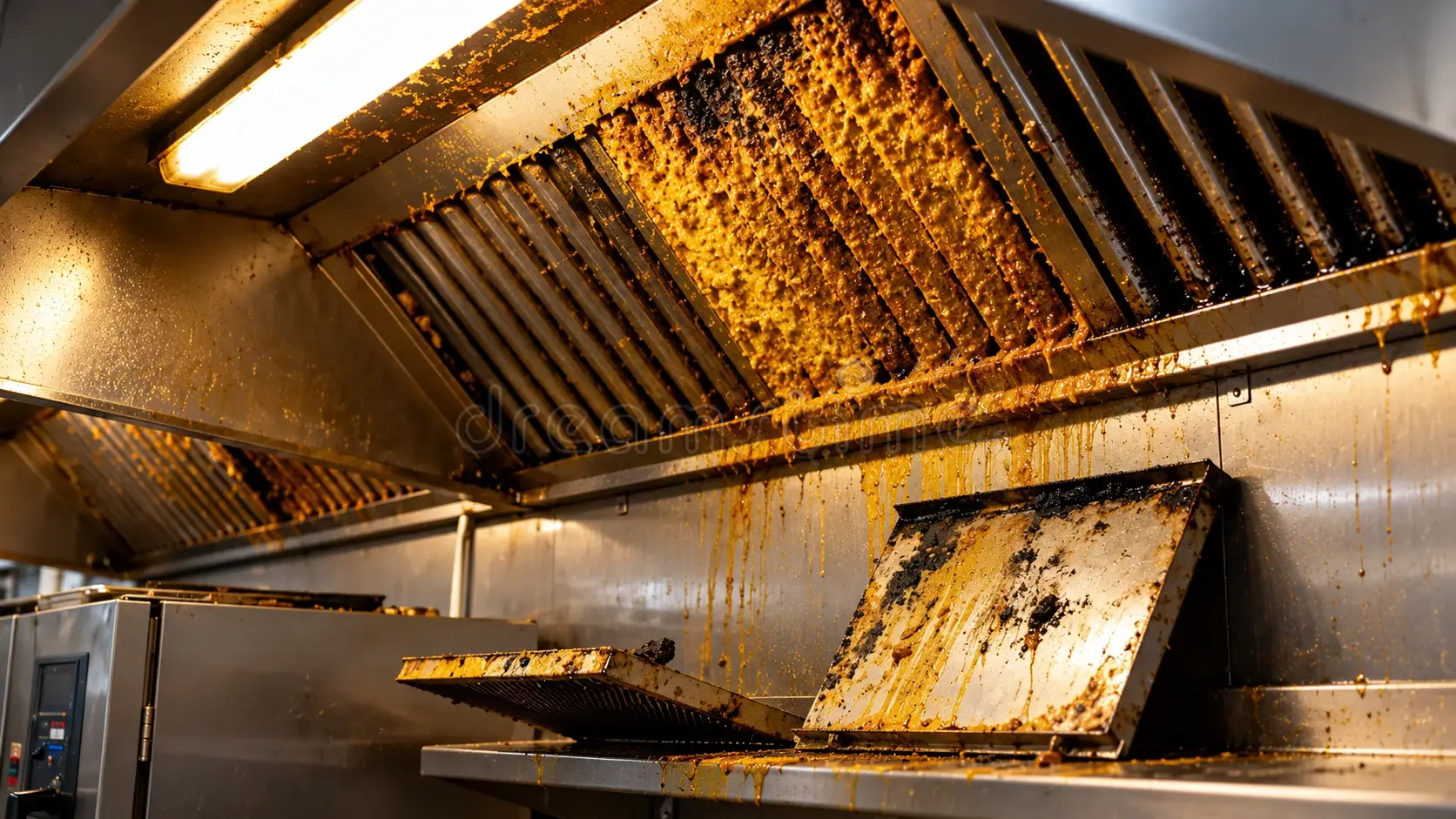
FIRE MARSHAL RESPONSE
A fire marshal walked through your kitchen and left with concerns. You have a deficiency notice in your hand and a reinspection date. Here is what that means, what to do this week, and how to bring the right documentation back.
June 05, 2026 · By Facilitec Southwest
A fire marshal inspection failure is not the end of a kitchen. It is a written warning with a deadline. Most operators we work with receive the deficiency notice, take a deep breath, and start asking the same questions in the same order: How serious is this? Can we keep cooking? How long do we have? What does the correction cost? Who performs the work? What documentation do we bring back to the reinspection?
The honest answer to all of those questions lives in the deficiency notice itself — and in the section of NFPA 96, the national fire-safety standard for commercial kitchen exhaust systems, that the marshal cited. This guide is the plain-English walk-through. It covers what counts as a deficiency, the citations that recur in most kitchens, what reinspection looks like in Dallas and the other major metros across our service area, how to scope the corrective work, and what documentation to put in front of the marshal on the second visit. The full text of the cited sections is available on our NFPA 96 Codes reference page.
QUICK DEFINITIONS, BEFORE WE GO FURTHER
Fire marshal is the city or state official who enforces fire and life-safety codes. In Texas, most kitchen inspections come from a city fire department’s fire marshal’s office (Dallas Fire-Rescue, Houston Fire Department, Austin Fire Department, and so on). In Louisiana, the State Fire Marshal handles most enforcement. The official term in the code books is Authority Having Jurisdiction, abbreviated AHJ. NFPA 96 is the National Fire Protection Association’s standard for commercial kitchen hoods, ducts, and exhaust fans; the current edition is the 2024 edition. Deficiency notice is the written form the fire marshal leaves behind listing what was found and what must change.
What a Fire Marshal Deficiency Actually Is
A deficiency is anything the marshal observes during the inspection that does not meet the code the city has adopted. For a kitchen hood inspection, that code is almost always NFPA 96 — sometimes referenced by the International Fire Code or the International Mechanical Code that the city enforces, both of which point back to NFPA 96 for commercial cooking ventilation.
The notice itself usually has four parts:
- What the marshal observed (the actual problem — heavy grease, missing sticker, blocked panel).
- Which rule was violated (the NFPA 96 section, the IFC reference, or the local fire code citation).
- What has to be done to correct it.
- The deadline — a date by which the correction has to be complete and the reinspection scheduled.
Most deficiencies are correctable. A few — a non-functioning fire suppression system on an active cooking appliance, for example — can result in an immediate order to stop using that appliance until the problem is fixed. The notice itself tells you which category you’re in.
The Citations That Recur in Most Kitchens
Across the restaurants, hotels, hospitals, schools, casinos, and other commercial cooking establishments we serve in Texas, Oklahoma, Louisiana, New Mexico, and Arkansas, five citation patterns recur. Each one ties back to a specific NFPA 96 rule. Each one has a clean correction path.
1. Grease Accumulation Past the Limits
The most common citation is grease found above the depth that NFPA 96 allows. The standard sets three limits, each for a different part of the system. On the hood itself, the filters, the exhaust fan, and the ductwork, the limit is 0.002 inches (50 micrometers — about the thickness of a sheet of copy paper). On other surfaces inside the system, the limit is 0.078 inches (about two millimeters). On the inside of the fan housing on the roof, the limit is 0.125 inches (one-eighth of an inch). Any reading thicker than the limit for that surface requires a cleaning.
The grease-depth thresholds live in NFPA 96, Section 12.6.1.1, with the specific limits in 12.6.1.1.1, 12.6.1.1.3, and 12.6.1.1.4. The fire marshal carries a depth gauge that measures the accumulation directly. A citation for grease accumulation means the gauge crossed the line — and a cleaning has to happen before the reinspection. The companion guide on how often a commercial kitchen exhaust system should be cleaned walks through the inspection schedule in Table 12.4 and how the cleaning thresholds connect to it.
2. Missing or Expired Service Label on the Hood
NFPA 96 requires an adhesive label to be securely attached to the hood after every inspection or cleaning. The label must show the date (with a perforation marking it), the technician’s name, and the company’s contact information. It must remain on the hood until the next service. The full rule lives in Section 12.6.13, with the contents specified in 12.6.13.1 and the durability requirement in 12.6.13.2.
A hood with no service label — or a label with no date, no technician name, or no service provider contact — is a deficiency on its face. The correction is straightforward: arrange the service and have the cleaning company apply the label properly. The companion post on what belongs in a real NFPA 96 cleaning report and what the service label should say covers the full documentation chain in detail.
3. No Written Report on File Within the Two-Week Window
Every time the hood is inspected, a written report must reach the equipment owner within two weeks (NFPA 96, Section 12.6.14). Every time the hood is cleaned, a separate written report must reach the equipment owner within two weeks (Section 12.6.15). The fire marshal can ask to see those reports — and the insurance carrier asks for the same documents, as the guide on the insurance-ready hood cleaning file covers in more depth.
“We do not have one” is a deficiency. “We have one, but it is older than the cooking-volume cadence allows” is a deficiency. The correction is to schedule the work, receive the report, and have it on hand for the reinspection.
4. Blocked, Missing, or Inaccessible Duct Access Panels
Access panels are the small doors built into the ductwork so a technician can reach inside the duct to clean it. NFPA 96 requires the system to be designed with enough access for cleaning. When a previous remodel covered an access panel with drywall, sealed it with permanent material, or removed it without replacement, the marshal will cite it. The correction is to restore the access panel — sometimes a quick fix during the next service visit, sometimes a duct contractor’s job depending on what is covering the panel.
5. Fire Suppression System Overdue or Out of Date
The wet-chemical fire suppression system inside the hood — the one that triggers nozzles to spray a fire-quenching agent if a flare-up happens — must be inspected and tested by a qualified service company every six months under NFPA 96, Section 12.2.1. Fusible links (the small metal-alloy parts that trigger the system at a set temperature) must be replaced at least semiannually. A suppression tag with an expired date — or a missing tag entirely — is a citation. The correction must come from a licensed fire suppression contractor, not the hood cleaning company.
THE PATTERN THESE FIVE CITATIONS SHARE
Each one is a documentation problem before it is a hardware problem. A fire marshal cannot tell whether grease is being cleaned on schedule unless the service label, the written report, and the recurring cadence are all there to read. Build the file the standard requires, and most of these citations stop appearing.
What Reinspection Looks Like in Major Texas Cities
Once the corrections are made, the fire marshal returns for a reinspection. The process and fees vary by city.
Dallas Fire-Rescue
Dallas enforces fire code through the Prevention and Investigation Bureau, with the Inspection and Life Safety Education Division (under the Fire Marshal) handling code enforcement, inspections, and education. Dallas currently runs on the 2021 International Fire Code with Dallas amendments effective February 10, 2023, and the 2021 International Mechanical Code with Dallas amendments effective May 12, 2023.
Dallas Fire-Rescue’s reinspection fee schedule:
| REINSPECTION | FEE |
|---|---|
| First reinspection | $171 |
| Second reinspection | $200 |
| Third reinspection (and beyond) | $255 |
| Penalties upon conviction | Up to $2,000 |
The fees compound. A kitchen that fails the first reinspection because the corrections weren’t fully complete pays $200 the next time. A repeat offender at the third visit pays $255 plus risks the conviction penalty. The cleanest path is to pass the first reinspection on the first try.
Houston, Austin, and San Antonio
Each of the other major Texas metros runs its own process through its city fire department’s fire marshal’s office. Houston operates through the Houston Fire Department Fire Marshal’s Office. Austin operates through the Austin Fire Department Fire Marshal’s Office. San Antonio operates through the San Antonio Fire Department. Each sets its own reinspection fee schedule, and each can issue civil penalties under municipal fire code authority. The deadline on the deficiency notice and the contact information for the assigned marshal are the two pieces of information that matter most — both are always on the notice.
Outside Texas — Louisiana, Oklahoma, New Mexico, Arkansas
Louisiana centralizes most commercial cooking enforcement under the Louisiana State Fire Marshal. Oklahoma, New Mexico, and Arkansas each combine state fire marshal authority with local fire department inspection in their major cities. The names and fees change. The five citation patterns above do not.
FIELD NOTE
Across deficiency responses Facilitec Southwest has handled in the field, the most common operator mistake is treating the deficiency notice as a checklist of isolated problems to clear, rather than as a snapshot of a process gap. The kitchen that rushes to fix the listed items and passes the reinspection — but does not address why the deficiencies appeared in the first place — almost always fails the next inspection. Marshals are usually faster to clear a kitchen that arrives at the reinspection with a credible plan for staying compliant going forward than one that just sprints to the finish.
How to Scope the Remediation
Once you know what was cited, the next question is how much work the correction actually involves. Some deficiencies are paperwork. Some are a real cleaning. Some are construction.
| DEFICIENCY | TYPE OF CORRECTION | TYPICAL TURNAROUND |
|---|---|---|
| Missing service sticker | Paperwork — properly applied label from the cleaning company after the next service | Same day, with a service visit |
| Missing or stale written report | Paperwork — service visit plus a new report within two weeks | 2-3 weeks total |
| Grease above the depth limits | Real cleaning of the affected sections — hood, filters, ducts, fan | One night for most kitchens; longer for heavily loaded systems |
| Blocked or inaccessible access panel | Restoration of access — sometimes the hood cleaner, sometimes a duct contractor | 1-2 days, depending on what’s covering the panel |
| Fire suppression overdue or out of date | Service from a licensed fire suppression contractor | 1-2 weeks for scheduling and parts |
When multiple deficiencies were cited together, the corrections can usually be coordinated. A kitchen that needs a real cleaning, a missing-panel fix, and an updated written report can often have all three completed in a single overnight visit when scheduled correctly. A recurring Maintenance Program is the simplest way to prevent the same citation set from returning at the next inspection cycle.
What to Bring to the Reinspection
The fire marshal returns expecting to see two things: the actual hardware corrected, and the documentation that proves it.
Hardware: the system clean to the depth limits NFPA 96 requires, the access panels restored and reachable, the fire suppression system serviced and tagged with a current date. The marshal will inspect each of the items that were cited and confirm they are now compliant.
Documentation: a current sticker on the hood with date, technician name, and company contact; a written report dated within the two-week window after the corrective service; and the corrective service invoice from the contractor who did the work. If a fire suppression contractor handled part of the correction, their service tag and invoice belong in the file too.
An ordered, complete file moves the reinspection quickly. The marshal sees what was cited, sees what was done, sees the documentation that proves it, signs off, and moves on.
A PRACTICAL POINT
Bring the original deficiency notice with you to the reinspection. The marshal will use it as the checklist. Going down the list item by item, with the matching documentation for each, is the fastest path to a clean reinspection.
How Facilitec Southwest Handles a Deficiency Response
Operators usually call us in one of two states. The first state is the calm one — the inspection happened, the deadline is a few weeks out, and the kitchen wants the corrective service on a normal schedule. The second state is the urgent one — the inspection happened today, the reinspection is in 48 hours, and the kitchen needs the work done overnight to avoid losing business hours.
Both states are routine for our team. Our After Hours Service is built for the urgent one. Certified Technicians mobilize overnight, perform the corrective kitchen hood cleaning, address the access panels, and apply the service label and the duct-panel service tags before the next opening. The written report follows within two weeks per NFPA 96, Section 12.6.15. For an active deficiency response, we also provide a same-day service invoice and a redacted copy of the report’s key findings, so the kitchen has documentation in front of the marshal on the reinspection morning.
Facilitec Southwest follows NFPA 96 guidelines for cleaning and inspection of grease buildup. The corrective service is the same work we perform on a routine maintenance visit — cleaning the system from cooktop to rooftop, clean to bare metal, with documented before-and-after photos and the service label on the hood. The pressure is the timeline, not the work itself. Four decades of fieldwork across the Southwest means we have stood in front of every fire marshal in the region. For multi-site portfolios, our NFPA Compliance Services consolidate the corrective documentation across every location into one file the broker, the underwriter, and the marshal can read in a single sitting. The outcome is a grease-free, fire-safe facility and the peace of mind that comes with it.
What to Do This Week
If you’re reading this with a deficiency notice in front of you, the order of operations is short:
- Read the notice carefully. Note the cited deficiencies, the rule references, the correction deadline, and the marshal’s contact information.
- Identify what’s hardware and what’s paperwork. Use the table above as a rough guide. If you’re not sure how serious a citation is, call the marshal’s office — they will clarify what they’re looking for at the reinspection.
- Schedule the corrective service. For a hood-related citation, the contractor has to be a “properly trained, qualified, and certified” person accepted by the local fire marshal (NFPA 96’s qualified-person rule, Section 12.6.1). For a fire suppression citation, the contractor has to be a licensed suppression service company.
- Confirm the documentation will be ready in time. Sticker on the hood at the end of the service visit. Written report or interim findings before the reinspection. Service invoice from the contractor.
- Plan the reinspection day. Have the original deficiency notice, the corrective documentation, and someone on site who can walk the marshal through what was done.
Grease fires destroy buildings. They end businesses. They put people at risk. That’s why the deficiency notice exists — and that’s why correcting it well, on time, with full documentation, is the right answer every time.
Frequently Asked Questions
What happens if I fail a fire marshal hood inspection?
The marshal issues a written deficiency notice that lists what was found, references the rule that was violated, and sets a deadline to correct it. The kitchen usually stays open while the corrections are made, but a serious deficiency — heavy grease, blocked access, a non-functioning fire suppression system — can result in an order to stop cooking until the issue is fixed. After the correction window, the marshal returns for a reinspection and charges a fee for the second visit.
What are the most common fire marshal citations on a hood inspection?
Five patterns recur in most jurisdictions: grease accumulation past NFPA 96’s depth limits (the grease-depth rule, Section 12.6.1.1); a missing or expired sticker on the hood (the hood-label rule, Section 12.6.13); no written report on file within two weeks of the last service (the two-week report rules, Sections 12.6.14 and 12.6.15); blocked or missing duct access panels; and a fire suppression system that is overdue for its semiannual service or has parts that are out of date.
How much is a fire marshal reinspection fee in Dallas?
Dallas Fire-Rescue currently charges $171 for the first reinspection, $200 for the second, and $255 for the third and beyond. Penalties upon conviction can reach up to $2,000. Other Texas cities and other states set their own fees — check with your local fire marshal’s office.
Can I keep my restaurant open after a hood inspection failure?
Usually yes, while the corrections are made — but it depends on the severity of the deficiency. A missing service sticker is a paperwork fix. Heavy grease past the NFPA 96 limits typically means a cleaning has to happen before the reinspection. A non-functioning fire suppression system on a cooking appliance can result in an order to stop using that appliance until the system is restored. The deficiency notice itself tells you the deadline and the conditions.
Who can fix an NFPA 96 deficiency?
Cleaning and inspection corrections have to be done by a “properly trained, qualified, and certified” person accepted by the local fire marshal — that’s NFPA 96’s qualified-person rule (Section 12.6.1 for cleaning, Section 12.4 for inspection). The two certifications most fire marshals recognize are IKECA’s and Phil Ackland Training’s. Fire suppression corrections have to come from a licensed suppression service company. Documentation corrections come from the cleaning company that did the work.
How long do I have to correct a fire marshal deficiency?
The deadline appears directly on the deficiency notice. In Texas metros, the window is commonly two to four weeks for most paperwork and cleaning corrections, longer for construction-level repairs like restoring an access panel. A severe deficiency — a non-functioning suppression system, for example — can require immediate action before any further cooking on the affected appliance. The marshal’s office will clarify the timeline when called.
Sources: NFPA 96, 2024 Edition — Section 12.2.1 (suppression-maintenance rule); Section 12.4 (qualified-person rule for inspection); Table 12.4 (the inspection schedule); Section 12.6 (cleaning of exhaust systems); Section 12.6.1 (qualified-person rule for cleaning); Section 12.6.1.1, 12.6.1.1.1, 12.6.1.1.3, 12.6.1.1.4 (grease-depth thresholds); Section 12.6.13 (hood-label rule); Section 12.6.14 (two-week inspection report rule); Section 12.6.15 (two-week cleaning report rule). Dallas Fire-Rescue: Prevention and Investigation Bureau, Inspection and Life Safety Education Division. Dallas amendments — 2021 International Fire Code effective February 10, 2023; 2021 International Mechanical Code effective May 12, 2023. Reinspection fee schedule reflects Dallas Fire-Rescue’s current published rates; verify with the AHJ at the time of reinspection. We follow NFPA 96 guidelines for cleaning and inspection of grease buildup.