OPERATIONS & REGULATIONS · SECTION 12.6.5
Every hood cleaning quote in the Southwest promises the same three words: cleaned to bare metal. It’s the phrase fire marshals listen for, the phrase insurance adjusters look for on the written report, and the phrase NFPA 96 uses to define what a compliant cleaning produces. It’s also the phrase most operators have never seen defined. Here’s what it means, where it applies, and how you can verify it without climbing into the duct yourself.
September 15, 2026 · By Facilitec Southwest
QUICK ANSWER
Reopening a commercial kitchen after a fire requires four sign-offs in a specific order: the fire marshal (or AHJ) must clear the incident investigation and confirm the exhaust system is safe to operate; the fire suppression vendor must inspect, recharge, and recertify the wet-chemical system; a Phil Ackland Certified or IKECA-credentialed exhaust cleaning vendor must clean the entire exhaust path to bare metal per NFPA 96 Section 12.6.5 and document it; and the insurance carrier must accept the claim documentation and authorize repairs. Depending on the fire’s severity and damage scope, realistic reopening timelines run from three to five days for a contained cookline incident to four to eight weeks for a fire that traveled the ductwork and damaged the roof. Operators with complete NFPA 96 documentation before the fire move through every step faster.
BARE METAL, DOCUMENTED
Facilitec Southwest’s Phil Ackland Certified Technicians clean to the Section 12.6.5 standard at every accessible surface and photograph the result — so you can verify it from the written report, not the rooftop.
See Our Kitchen Hood Cleaning Service →
1. What Section 12.6.5 Says
The text of the requirement in NFPA 96, 2024 Edition is short:
Accessible portions of the exhaust system shall be cleaned to bare metal at intervals as determined by the inspection required in Section 12.6.1.1.
Three things about this sentence do the compliance work.
“Accessible portions”
The standard applies to every surface a technician can reach — which, under Section 12.6.4, is supposed to be the entire exhaust system. Where access panels exist, the ductwork behind them is accessible. Where a hinge kit exists on the fan, the fan interior is accessible. Where neither exists, Section 12.6.4 requires them to be installed. “Accessible” is not a loophole for skipping sections; it’s the code’s way of saying the whole system has to be reachable and then all of it has to be cleaned. See our post on the NFPA 96 access panel rule for how accessibility gets enforced.
“Cleaned to bare metal”
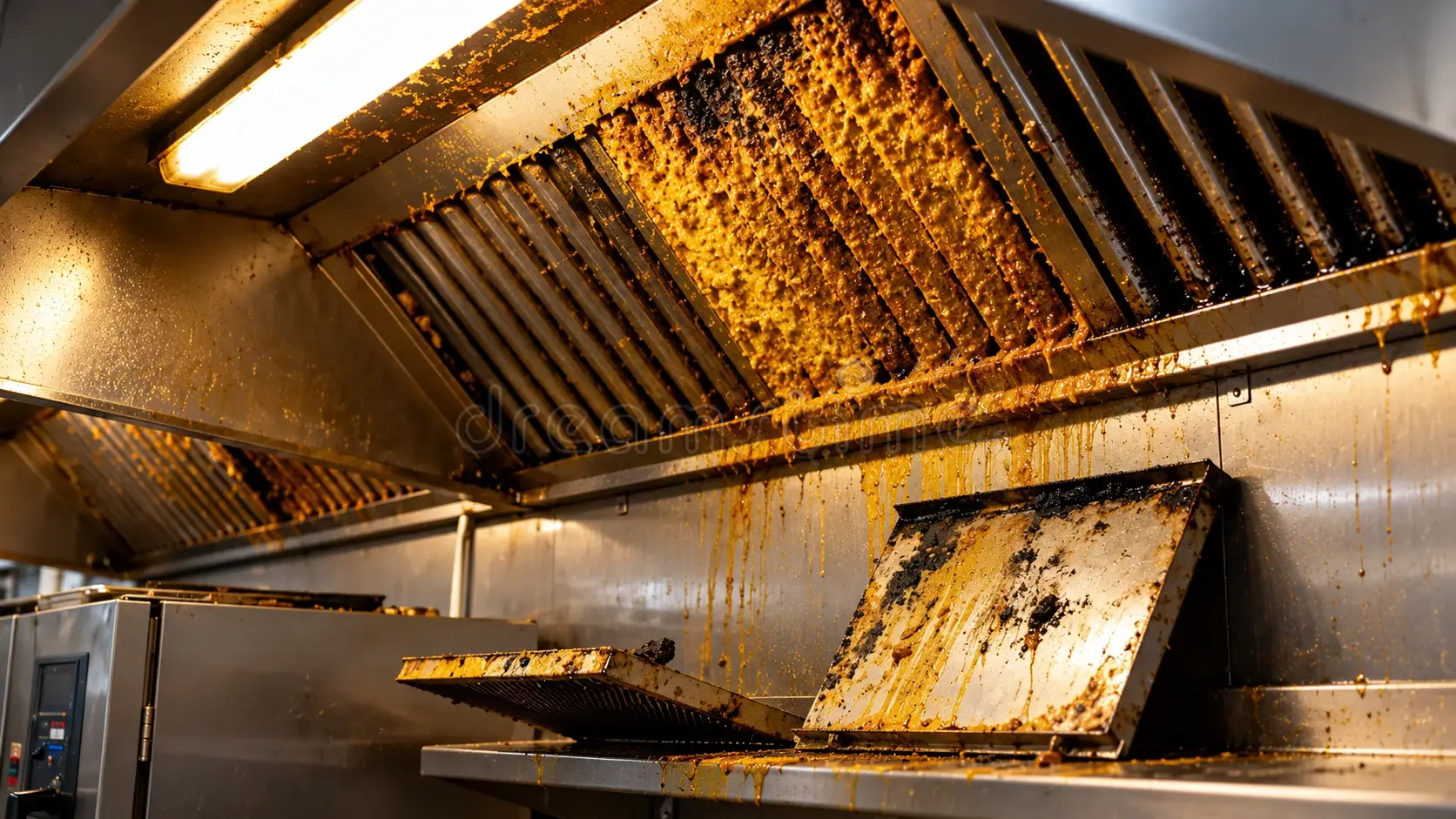
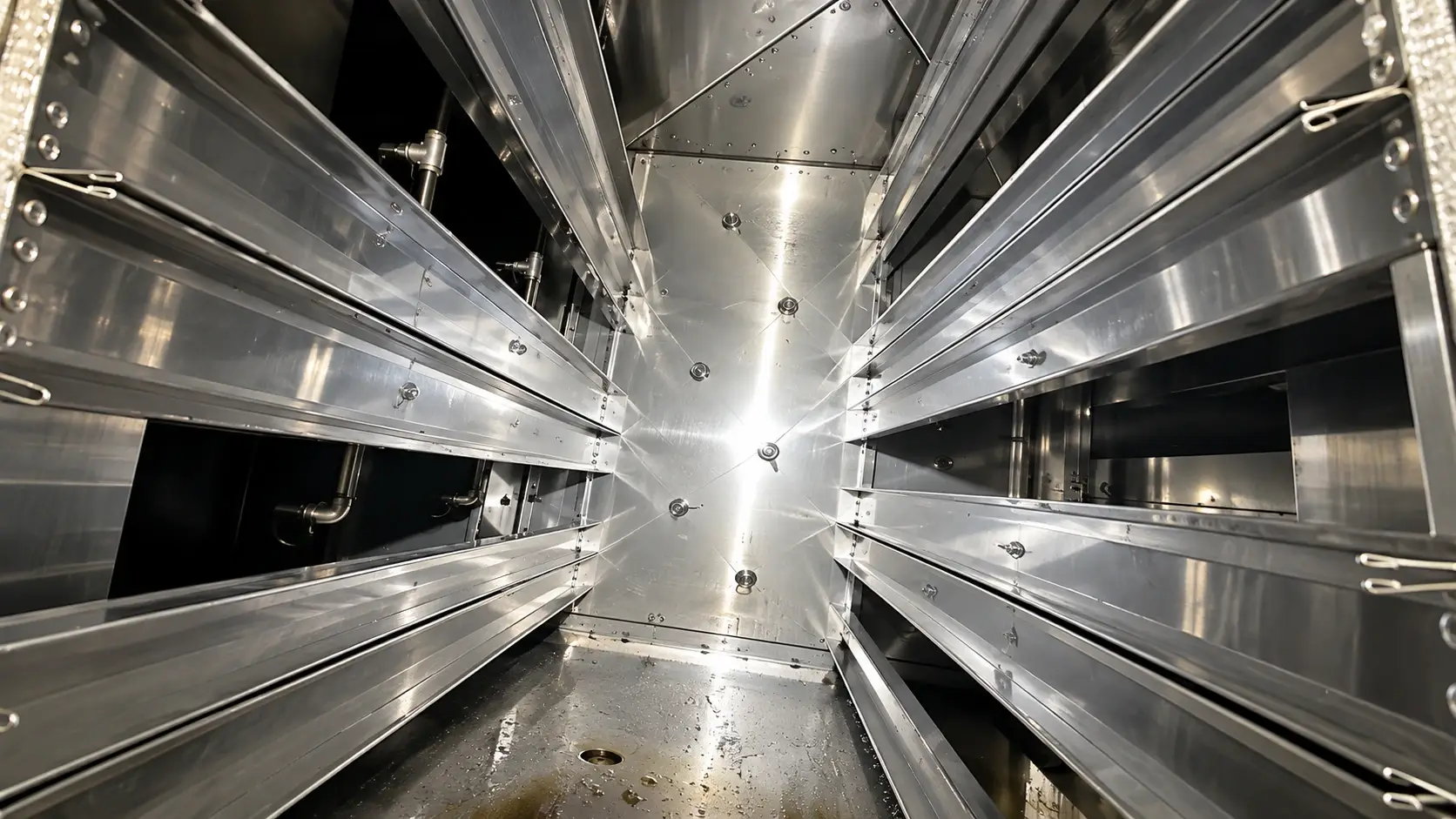
This is the outcome. Not “cleaned,” not “degreased,” not “serviced” — cleaned to a specific end state where the metal itself is exposed. The phrase originates in the industry practice the standard codified: when a duct has been properly cleaned, you can see the steel. Grease is opaque. Carbonized residue is black. Film is dull. Bare metal is reflective, shows its original color and grain, and passes the glove test.
“At intervals as determined by the inspection”
Cleaning to bare metal happens when the Section 12.6.1.1 inspection finds combustible deposits. The interval comes from the inspection finding, not from the calendar. Our post on inspection vs. cleaning covers that distinction in full.
THE STANDARD IN ONE SENTENCE
NFPA 96 doesn’t care how you clean. It cares that when you’re done, the metal is visible everywhere a technician can reach.
2. What Bare Metal Looks Like — and What It Doesn’t
The clearest way to understand the standard is to see the difference between a surface that meets it and one that doesn’t.
| MEET SECTION 12.6.5 | DOES NOT MEET SECTION 12.6.5 |
|---|---|
| • Original metal color visible — stainless shows silver, galvanized shows spangle pattern | • Surface is uniformly dull or matte — a thin film remains |
| • Surface texture visible — you can see the grain, welds, seams, rivets | • Surface has a tacky or waxy feel under a glove |
| • A gloved hand drawn across the surface comes away clean | • Corners, seams, and rivets hold dark residue while flat surfaces look clean |
| • Light reflects off the surface | • Black or brown carbonized deposits remain, even if thin |
| • Corners and seams show the same condition as flat surfaces | • The hood interior looks clean but access panel interiors don’t |
| • Access panel interiors match the visible hood interior | • Fan wheel blades have a visible coating |
| • Fan wheel blades show metal, not grease coating | • Surface smells of grease after cleaning |
The most common failure is the second column’s third item: flat surfaces cleaned, corners and seams skipped. Grease accumulates where air slows down — at every seam, joint, corner, and rivet line. A cleaning that sprays and wipes flat surfaces but doesn’t work the corners leaves exactly the deposits that carry a fire.
FIELD NOTE — THE FLASHLIGHT TEST
Fire marshals across TX, OK, LA, NM, and AR carry a flashlight for one reason: bare metal reflects, grease doesn’t. A marshal opens an access panel, shines the light down the duct, and looks for a reflection off the far wall. If the beam disappears into a dull surface, the duct wasn’t cleaned to bare metal — regardless of what the service label says. Operators can run the same test on their own hood interior after a cleaning. If it doesn’t shine, it wasn’t done.
3. Where the Standard Applies — Surface by Surface
Section 12.6.5 covers the full exhaust path. Each surface has its own challenge in reaching bare metal.
| SURFACE | WHAT MAKES IT HARD | WHAT BARE METAL REQUIRES |
|---|---|---|
| Hood canopy interior | Large flat area — easy to clean, easy to inspect; the seams and corners are where deposits hide | Every seam, corner, and fastener line worked; not just the flat panels |
| Plenum | Behind the filters; heaviest deposits in the system because this is where grease first condenses | Filters removed, plenum interior scraped and washed, grease trough cleared |
| Horizontal ductwork | Only reachable through access panels; first 10–20 feet carry the thickest, most oxidized grease | Every panel opened; interior scraped and pressure-washed; verified by flashlight from each opening |
| Vertical riser | Gravity pulls grease down the walls; tall risers require access at multiple levels | Panel access at each level; interior cleaned top to bottom; base cleanout emptied |
| Exhaust fan interior | Requires the Section 8.1.1.1 hinge kit to open; fan wheel blades trap grease on the leading edges | Fan tilted on hinge; wheel, housing interior, and drain cleaned; blades show metal |
| Fan housing exterior and curb | Rooftop exposure; grease drains and migrates; containment system catches most but not all | Housing exterior cleaned; drain clear; containment inspected and serviced |
Any surface in this table that’s skipped is a surface where Section 12.6.5 wasn’t met. A hood-only cleaning satisfies one row of six.
4. Why the Standard Is Bare Metal and Not Something Easier
Operators sometimes ask why the code demands bare metal rather than “substantially clean” or a measurable grease-thickness threshold. Three reasons.
- Any grease is fuel. Grease auto-ignites around 600°F for fresh oils and lower for oxidized deposits. A thin film across a 40-foot duct run is enough fuel to carry a fire from the cookline to the roof. “Mostly clean” leaves fuel in place. See our post on grease duct fires for the mechanics.
- Residue accelerates the next accumulation. Grease bonds to grease faster than it bonds to clean metal. A duct left with a film reaches the next cleaning threshold sooner than one cleaned to bare metal. The standard buys the operator the full interval.
- Bare metal is verifiable without instruments. A thickness threshold requires a gauge and training to use it. Bare metal requires a flashlight and a glove. The standard chose the outcome anyone can check.
The bare-metal standard is also why a compliant cleaning takes longer than a wipe-down. Reaching bare metal in the corners of a plenum, inside a 30-foot duct run, and on the leading edges of a fan wheel is mechanical work — scraping, hot-water pressure washing, chemical degreasing, and re-scraping. Our post on how long a hood cleaning takes explains why two hours on a high-volume kitchen isn’t enough time to get there.
5. How Operators Can Verify Bare Metal Without Climbing Into the Duct
You don’t need to go on the roof or open an access panel to know whether your vendor reached bare metal. Five checks, all from the ground.
- Look at the hood interior. Pull one filter after the cleaning and shine a flashlight into the plenum. You should see reflective metal, visible seams, and a clean grease trough. If the plenum is dull or dark, the rest of the system almost certainly is too.
- Read the written report for surface-by-surface findings. A Section 12.6.15 report from a vendor who reached bare metal lists each surface cleaned — hood, plenum, horizontal duct by panel, riser, fan — with condition before and after. A report that says “cleaned hood system” without surface detail is a report from a vendor who may not have gone past the hood.
- Ask for photographs. Before-and-after images of the plenum, at least one duct interior through an access panel, and the fan wheel. Photographs of bare metal are unambiguous. Vendors who reach it are glad to show it. Insurance carriers increasingly require them — see our post on when insurance requires more than NFPA 96.
- Check the service label for exclusions. Section 12.6.13 requires the label to note any areas not cleaned. A label with no exclusions on a system with known inaccessible sections is a label that isn’t telling the whole story. A label that honestly lists “vertical riser above second floor — no access” is a vendor being straight with you, and a Section 12.6.4 issue to fix.
- Compare cleaning time to system size. A single-hood moderate-volume kitchen takes 3–5 hours to bring to bare metal. If your vendor was in and out in 90 minutes, they didn’t reach the standard.
SIGNATURE APPROACH
From Cooktop to Rooftop, our Phil Ackland Certified Technicians clean every accessible surface to the Section 12.6.5 standard and photograph the result — plenum, duct interior, fan wheel — on every written report. You verify bare metal from the report, not the rooftop. The outcome is a Grease-Free and Fire-Safe kitchen and the peace of mind that comes with it.
6. What “Cleaned to Bare Metal” Does Not Mean
Four misreadings of the standard come up often enough to address directly.
It doesn’t mean the metal is new
Bare metal shows its age. Discoloration from heat, staining from years of service, surface pitting, and patina on older galvanized duct are all consistent with bare metal. The standard is about the absence of grease and residue, not the presence of a factory finish. A 25-year-old duct cleaned to bare metal looks like 25-year-old steel — not like a new duct.
It doesn’t mean polished
Some vendors offer stainless polishing on the hood exterior as an add-on. That’s cosmetic. Section 12.6.5 is about the interior grease path. A polished hood face with a greasy plenum behind it fails the standard.
It doesn’t apply to filters
Filters are addressed separately under Section 12.4 and are the operator’s daily responsibility. Section 12.6.5 governs the fixed exhaust system. A vendor who reaches bare metal on the system has met the standard even if the filters — which the operator maintains — are loaded. See our post on grease filter types for the operator side.
It doesn’t override “accessible”
If a section of duct has no access panel and no hinge kit provides entry, the vendor can’t reach it and can’t clean it to bare metal. That’s a Section 12.6.4 accessibility failure — the fix is installing access — and the vendor should note it on the service label as an area not cleaned. It’s not a Section 12.6.5 failure by the vendor; it’s a compliance gap the operator has to close.
FIELD NOTE — THE LABEL THAT TELLS THE TRUTH
The most useful service label an operator can receive is one that lists what wasn’t cleaned. “Horizontal duct section between panels 3 and 4 — inaccessible, panel installation recommended” is a vendor doing their job. It tells the fire marshal the vendor was honest, tells the operator exactly what to fix, and — once the panel is installed and the section is cleaned — closes the gap with a documented trail. A label with no exclusions on a system the vendor couldn’t fully reach is the one that causes problems at inspection.
7. Bare Metal in the Documentation Chain
Section 12.6.5 is the outcome. Three other sections document that the outcome was reached.
| DOCUMENT | SECTION | WHAT IT SAYS ABOUT BARE METAL |
|---|---|---|
| Service label on the hood | 12.6.13 | Date of cleaning, next service date, and any areas not cleaned to the standard |
| Access panel tags | 12.6.10 | Confirms each panel was opened and the duct behind it was cleaned — the physical evidence that bare metal was reached in the ductwork, not just the hood |
| Written cleaning report | 12.6.15 | Surface-by-surface condition findings; photographs; areas requiring repair or access installation; delivered inside two weeks |
A fire marshal walking a kitchen reads all three together. Label says cleaned. Tags confirm which panels were opened. Report shows the result. When all three agree, the operator has documented compliance with Section 12.6.5. When they don’t — a label with a recent date but untagged panels and a report with no surface detail — the marshal has grounds to question whether bare metal was reached anywhere past the hood. Our post on what’s in a real NFPA 96 cleaning report covers the documentation in depth.
Frequently Asked Questions
What does “cleaned to bare metal” mean in NFPA 96?
NFPA 96 Section 12.6.5 requires accessible portions of the exhaust system be cleaned so the underlying metal surface is fully exposed — no grease, no carbonized residue, no film — such that the surface can be visually inspected. It’s an outcome standard: the code specifies the result, not the method. Bare metal reflects light, shows its original color and texture, and passes a glove test.
Where does the bare metal standard apply?
Every accessible surface of the exhaust system: hood canopy interior, plenum, horizontal ductwork through access panels, vertical riser, exhaust fan interior via the hinge kit, and fan housing. Under Section 12.6.4, the entire system is supposed to be accessible — so in practice the standard applies from cooktop to rooftop.
How can I tell if my hood was cleaned to bare metal?
Pull one filter and shine a flashlight into the plenum — you should see reflective metal, visible seams, and a clean trough. Read the written report for surface-by-surface findings. Ask for before-and-after photographs of the plenum, a duct interior, and the fan wheel. Check the service label for noted exclusions. Compare cleaning time to system size — under two hours on a full kitchen isn’t enough to reach the standard.
Does bare metal mean the duct should look new?
No. Bare metal shows its age — heat discoloration, staining, pitting, and patina are all consistent with the standard. Section 12.6.5 is about the absence of grease and residue, not a factory finish. Old steel cleaned to bare metal looks like old steel.
Why doesn’t NFPA 96 use a grease thickness measurement instead?
Three reasons: any grease is fuel, so a threshold leaves fuel in place; residue accelerates the next accumulation, shortening the interval; and bare metal is verifiable with a flashlight and a glove, while a thickness threshold requires a gauge and training. The standard chose the outcome anyone can check.
What if part of the system can’t be reached?
That’s a Section 12.6.4 accessibility issue, not a Section 12.6.5 cleaning failure. The vendor should note the inaccessible area on the service label per Section 12.6.13 and recommend access panel or hinge kit installation. Once access is installed and the section is cleaned, the gap closes with a documented trail.
Does bare metal apply to the grease filters?
No. Filters are governed by Section 12.4 and are the operator’s daily and weekly responsibility. Section 12.6.5 applies to the fixed exhaust system — hood, plenum, duct, fan. A vendor can meet the standard on the system while the operator’s filters are loaded.
Is “degreased” the same as “cleaned to bare metal”?
No. Degreasing is a method — applying a chemical to break down grease. Bare metal is an outcome — the grease is gone and the metal is visible. A surface can be degreased and still carry a film or residue in corners and seams. The standard is the outcome, not the step.
How does the fire marshal check for bare metal?
With a flashlight. Bare metal reflects; grease doesn’t. The marshal opens an access panel, shines the light down the duct, and looks for a reflection off the far wall. They also read the three documents together — service label, access panel tags, and written report — and look for consistency.
How does Facilitec Southwest document bare metal?
Phil Ackland Certified Technicians clean every accessible surface to the Section 12.6.5 standard and photograph the result — plenum, duct interior through access panels, fan wheel — on every written report delivered inside two weeks. Areas that can’t be reached are noted on the service label with a recommendation for access installation. See our Kitchen Hood Cleaning service.
NFPA 96, 2024 Edition — Section 12.6.5 (cleaning to bare metal at intervals determined by inspection); Section 12.6.1.1 (inspection requirement); Table 12.4 (inspection frequency); Section 12.6.4 (accessibility of exhaust system); Section 8.1.1.1 (exhaust fan hinge kit); Section 12.4 (filter cleaning, operator responsibility); Section 12.6.10 (access panel service tags); Section 12.6.13 (service label content including areas not cleaned); Section 12.6.15 (written cleaning report). The bare-metal outcome standard is defined by the text of Section 12.6.5 and its application in industry practice; the standard specifies the result, not the cleaning method. Auto-ignition temperature references for cooking grease reflect industry-published values for common oils and vary with oil type and oxidation state. Verification methods described (flashlight reflection, glove test, photographic documentation) reflect standard industry and AHJ inspection practice across TX, OK, LA, NM, and AR. IKECA references are to the International Kitchen Exhaust Cleaning Association’s CECS (Certified Exhaust Cleaning Specialist) and CECI (Certified Exhaust Cleaning Inspector) credentials, and ANSI/IKECA C10 industry standard. Phil Ackland Training is an internationally recognized training program for kitchen exhaust system inspection and cleaning. Facilitec Southwest holds Phil Ackland Certification for its technicians and follows NFPA 96 guidelines for cleaning and inspection of grease buildup. This article is a compliance reference, not legal or AHJ-specific advice.