OPERATIONS & REGULATIONS · ENVIROMENTAL COMPLIANCE
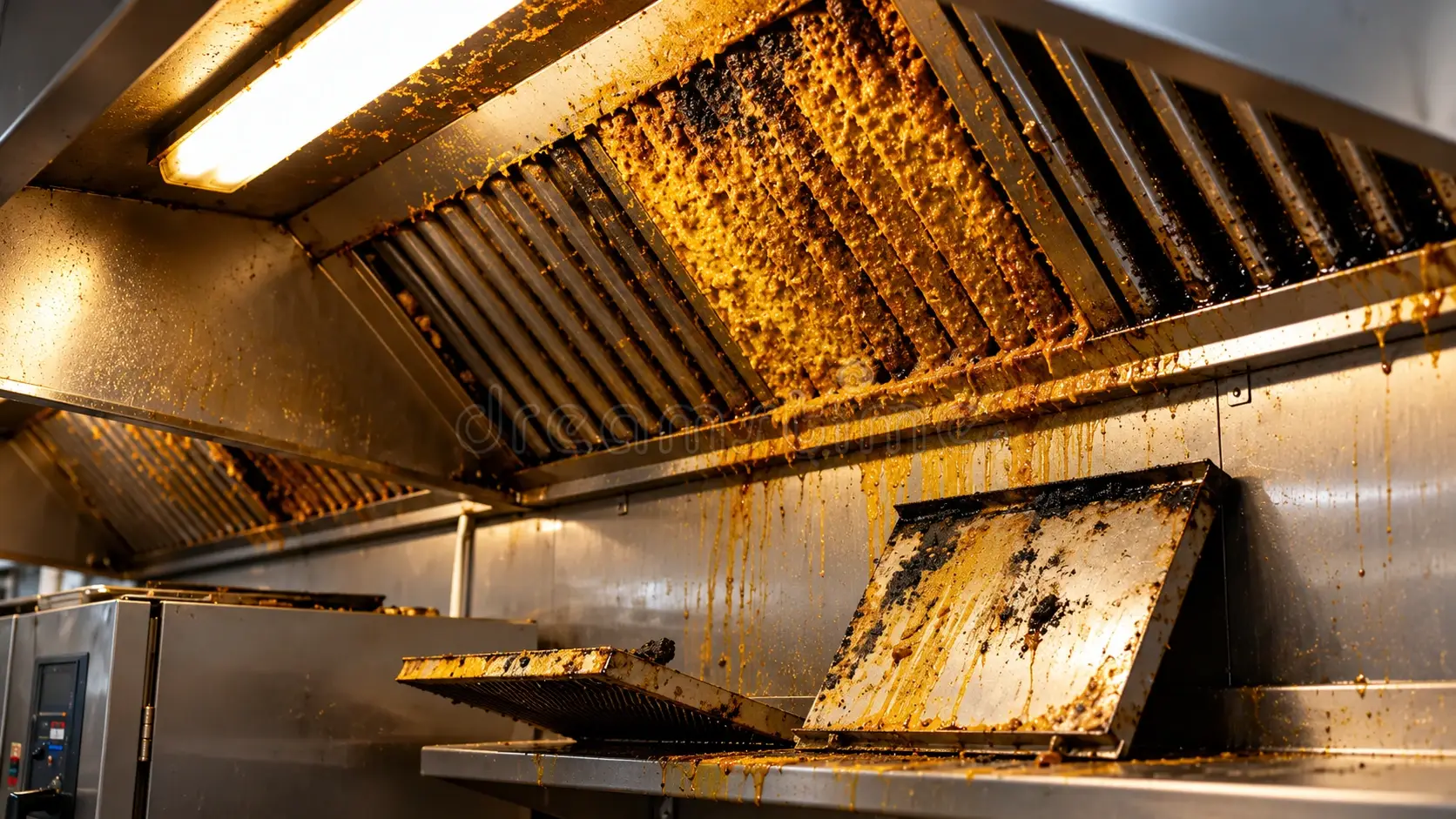
A hood cleaning crew arrives at 11 pm with a hot-water pressure washer, forty gallons of alkaline degreaser, and a kitchen whose duct holds thirty pounds of grease. Four hours later the duct is bare metal and the crew is gone. The grease didn’t vanish. It went somewhere — into a drum on the truck, into the grease interceptor, into the sanitary sewer, or, at a shop that doesn’t know better, into the parking lot storm drain and from there into the Trinity River. Which of those happened is the operator’s problem as much as the vendor’s.
QUICK ANSWER
Kitchen exhaust cleaning produces 100 to 500 gallons of hot, highly alkaline (pH 11–13), grease-laden wastewater per service. Under the federal Clean Water Act, discharging it to a storm drain, parking lot, alley, or any surface that drains to a storm sewer is illegal everywhere in the United States — storm sewers carry untreated water directly to rivers and lakes. The legal destinations are the sanitary sewer, through a grease interceptor, within the limits of the local wastewater utility’s pretreatment ordinance (which typically caps pH around 10 and restricts fats, oils, and grease), or capture and haul to a licensed disposal facility. On the roof, NFPA 96 Section 7.8.2.1 requires that grease draining from the fan be collected in a closed, noncombustible container rather than discharged onto the roof — which is why rooftop grease containment exists — and grease on a roof is both a fire hazard and a roof-membrane warranty problem. Operators in TX, OK, LA, NM, and AR should ask their vendor one question before every service: “Where does the water go?” — and should expect a specific answer that names the sanitary sewer connection, the interceptor, or the haul-off.
RESPONSIBLE HOOD CLEANING SURE WHICH HOODS YOU HAVE?
Facilitec Southwest captures, contains, and legally disposes of every gallon of hood cleaning wastewater — and services the rooftop containment that keeps fan grease off your roof and out of the storm drain.
See Our Kitchen Hood Cleaning Service →
1. What Hood Cleaning Wastewater Actually Is
Most operators picture hood cleaning as a technician wiping down stainless steel. The reality is a hot-water pressure washing operation that happens inside and above the kitchen, and the volume of liquid involved surprises people the first time they see it.
| COMPONENT | TYPICAL RANGE | WHY IT MATTERS FOR DISPOSAL |
|---|---|---|
| Volume per service | 100–500 gallons; more for large systems or first-time deep cleans | Too much to absorb or evaporate; has to go somewhere |
| Temperature | 150–200°F at the nozzle; cooler by the time it’s collected | Many sewer-use ordinances cap discharge temperature (often 140–150°F at the point of connection) |
| pH | 11–13 (strongly alkaline) from caustic degreasers | Most pretreatment ordinances cap discharge pH at 10.0–10.5; raw hood cleaning water is out of range |
| Fats, oils, and grease (FOG) | Pounds per service — emulsified by heat and alkalinity | FOG ordinances restrict discharge; emulsified grease passes through interceptors and re-solidifies in the sewer main |
| Suspended solids | Carbonized grease, soot, flaking deposits | Clogs drains and interceptors; sewer-use limits on total suspended solids |
| Other | Surfactants, sometimes solvent-based pre-treatments, trace metals from duct corrosion | Varies by vendor chemistry; the SDS tells you what’s in it |
The alkalinity is the point. Caustic degreasers — sodium or potassium hydroxide-based — are what turn baked-on grease into something that rinses off. That same chemistry is what makes the rinse water a regulated discharge. Our post on cleaning to bare metal covers what the chemistry has to accomplish; this post covers where it goes afterward.
2. The Storm Drain Is Never the Answer
This is the one rule that has no local variation, no exceptions, and no gray area. Every storm drain in every city in the Southwest connects to a municipal separate storm sewer system (MS4) that discharges untreated to a creek, river, bayou, or lake. Water that goes into a parking lot drain in Fort Worth is in the Trinity River within hours. In Houston, it’s in a bayou and then Galveston Bay. In New Orleans, it’s pumped directly into Lake Pontchartrain.
Under the federal Clean Water Act, discharging anything other than stormwater to an MS4 without a permit is an illicit discharge. Every city with an MS4 permit — which is every city of any size in Texas, Oklahoma, Louisiana, New Mexico, and Arkansas — is required by the EPA and its state environmental agency to have an illicit discharge detection and elimination program, with enforcement authority and penalties. Hood cleaning wastewater is one of the textbook examples those programs are built to catch: hot, alkaline, grease-laden, and discharged at night when nobody’s watching.
What enforcement looks like
- City stormwater inspectors respond to complaints and to visible evidence — a grease sheen in a parking lot drain, a dead patch in a drainage swale, a white film on the asphalt leading from the back door to the curb inlet
- Fines are assessed against the discharger — which can be the vendor, the property owner, or the operator, and often all three; municipal penalties commonly run from hundreds to several thousand dollars per day per violation, and state-level enforcement can go much higher
- Cleanup orders can require the responsible party to pay for drain and outfall cleaning
- Repeat violations get referred to the state agency — TCEQ in Texas, Oklahoma DEQ, Louisiana DEQ, the New Mexico Environment Department, Arkansas DEQ — and can involve Clean Water Act penalties that are an order of magnitude larger
FIELD NOTE — THE TRAIL TO THE CURB
Grease-laden alkaline water leaves evidence. It dries to a white or gray film on asphalt and concrete. It kills the grass in a drainage swale in a stripe. It leaves a rainbow sheen on standing water in the curb inlet. A city stormwater inspector who sees a trail from a restaurant’s back door to the parking lot drain doesn’t need to catch anyone in the act — the trail is the violation, and the restaurant’s name is on the building. We’ve been called by operators who received a notice of violation for a discharge their previous vendor made months earlier. The vendor was gone. The restaurant paid.
3. The Sanitary Sewer: Legal, With Conditions
The sanitary sewer — the drain system that goes to the wastewater treatment plant — is the legal destination for most hood cleaning wastewater, but it isn’t a free pass. Every wastewater utility operates under an EPA-mandated pretreatment program and publishes a sewer-use ordinance that sets limits on what commercial users can discharge. Three of those limits matter for hood cleaning.
| LIMIT | TYPICAL ORDINANCE VALUE | HOOD CLEANING WATER AS-IS | WHAT A COMPLIANT VENDOR DOES |
|---|---|---|---|
| pH | 5.0–10.0 or 5.5–10.5 at point of discharge | 11–13 | Neutralizes with a mild acid before discharge, or dilutes to within range, or hauls off |
| Temperature | Often 140°F or 150°F maximum at point of connection | Can exceed at the nozzle; usually within range by collection | Allows collected water to cool; never discharges directly from the pressure washer |
| Fats, oils, and grease | Often 100–300 mg/L; many ordinances simply prohibit discharge that causes interceptor bypass or sewer blockage | Far higher | Routes through the facility’s grease interceptor; pre-separates and drums off free grease; never discharges to a drain that bypasses the interceptor |
| Suspended solids | Varies; often 250–350 mg/L | High with carbonized deposits | Screens and settles before discharge; solids go in the drum |
The grease interceptor question
Every commercial kitchen in the Southwest is required by local plumbing and FOG ordinance to have a grease interceptor (a grease trap under the sink or a larger in-ground interceptor outside) between kitchen drains and the sewer. Hood cleaning wastewater that goes down a kitchen floor drain or mop sink passes through it. That’s the right path — with two caveats.
First, hot alkaline water emulsifies grease. An interceptor works by letting grease float and separate; emulsified grease doesn’t float, passes through, and re-solidifies downstream in the sewer main. This is why FOG programs in cities like Dallas, Fort Worth, Houston, and Austin specifically flag hood cleaning as a concern — and why a responsible vendor separates and drums as much free grease as possible before anything goes to the drain, and lets water cool before discharge.
Second, a 500-gallon slug of water through a 50-gallon under-sink trap in one night overwhelms it completely. The interceptor’s capacity has to be considered. Large systems and first-time deep cleans usually mean the water is captured and hauled rather than put down the drain at all.
THE MOP SINK TEST
If your vendor’s plan for the wastewater is “it goes down the mop sink,” ask three follow-ups: Does the mop sink drain through the grease interceptor? What’s the interceptor’s capacity versus tonight’s volume? And how is the pH brought into range before it goes down? A vendor who can answer all three has thought about it. A vendor who hasn’t will be the one who finds the storm drain more convenient.
4. Capture and Haul: The Clean Option
For large systems, first-time deep cleans, facilities with undersized interceptors, and any site where the only drains run to the storm sewer, the right answer is to capture every gallon and haul it to a licensed disposal facility.
How capture works
- Containment at the source. Plastic sheeting and funnels from the hood down to collection points. Water that comes off the duct is directed to a tub or drum, not the floor.
- Collection. Wet vacuums, sump pumps, and collection tanks move water from the kitchen to the truck. Rooftop fan cleaning uses containment berms and absorbent to keep rinse water off the roof surface and out of roof drains.
- Separation on the truck. Water sits in a holding tank; grease rises and is skimmed to a separate drum; solids settle and are drummed.
- Disposal. Water goes to a facility permitted to receive high-strength commercial wastewater — a grease hauler’s processing facility, a permitted industrial pretreatment facility, or, in some cities, a designated POTW receiving station. Grease goes to a rendering or biodiesel processor. Solids go to a permitted landfill or treatment facility.
- Documentation. A manifest or disposal receipt showing the facility, the date, and the volume — the paper trail that proves where it went.
This is more work and more cost than the mop sink. It’s also what the law requires in a large share of situations, and it’s the only option that produces a disposal record an operator can show a stormwater inspector or an insurance carrier.
5. The Roof: NFPA 96, Grease, and the Membrane
The rooftop is the other place grease goes, and it’s where fire code and environmental compliance meet. A kitchen exhaust fan throws grease — a working fan on a busy cookline can deposit pounds of it on the roof every month between cleanings. That grease is a problem three ways.
Fire code
NFPA 96 Section 7.8.2.1 sets requirements for rooftop exhaust terminations, among them that the system must have the ability to drain grease out of any traps or low points formed in the fan or duct near the termination into a collection container that is noncombustible, closed, rated for the use, and will not sustain combustion. That provision is the code basis for rooftop grease containment — the collection boxes, absorbent pillows, and perimeter systems that catch what the fan discharges. Our post on rooftop grease containment covers the systems in detail. A roof with pooled grease around the fan is a fuel source for a duct fire that reaches the fan, and fire marshals cite it.
Roof damage
Grease degrades the common commercial roofing membranes. EPDM (rubber) swells and softens on contact with animal and vegetable fats; TPO and PVC are more resistant but still deteriorate under sustained exposure; modified bitumen and built-up roofs absorb grease and lose their integrity. Roofing manufacturers’ warranties routinely exclude damage from grease, oil, and chemical exposure, and landlords in multi-tenant buildings increasingly write rooftop grease into leases as a tenant liability. A grease-damaged roof section around a fan can cost more to repair than years of containment service.
Stormwater
Rain falling on a grease-covered roof runs to the roof drains, and roof drains discharge to the storm sewer. A roof with uncontained fan grease is a continuous illicit discharge every time it rains — and a hood cleaning crew that pressure-washes the fan and lets the rinse water run to the roof drain has just made a direct discharge of hot alkaline grease-laden water to the storm sewer. Rooftop fan cleaning has to be done with containment, absorbent, and collection, exactly like the kitchen side.
FIELD NOTE — THE ROOF DRAIN SIX FEET FROM THE FAN
A strip-center restaurant we took over had a fan mounted within six feet of a roof drain, downslope. Years of fan discharge had run straight to the drain. The previous vendor’s fan cleaning had done the same. The roof membrane between the fan and the drain was soft enough to leave a thumbprint in. We installed a containment system with a perimeter berm, cleaned the roof surface with capture and haul-off, and documented the condition for the landlord. The roofing contractor’s estimate for that section was more than the restaurant’s annual hood cleaning contract.
6. Who Is Liable
Environmental liability for a hood cleaning discharge doesn’t stop with the vendor. Under most municipal stormwater and sewer-use ordinances, and under the Clean Water Act as enforced through them, liability can attach to anyone who caused, permitted, or allowed the discharge.
| PARTY | EXPOSURE | HOW TO REDUCE IT |
|---|---|---|
| Hood cleaning vendor | Direct discharger; primary liability | Written disposal procedures; disposal manifests; trained crews; proper equipment |
| Restaurant operator | Hired the vendor; the discharge came from their premises; name on the building | Ask where the water goes; put disposal requirements in the service agreement; keep manifests in the compliance file |
| Property owner / landlord | Owns the drains, the roof, and the parcel the storm drain sits on | Lease language requiring compliant disposal; rooftop containment requirements; right to approve vendors |
| Multi-unit operator / franchisor | Pattern exposure if the same vendor discharges illegally at many sites | Vendor qualification standard that includes wastewater disposal; audit manifests |
The operator’s protection is documentation. A service agreement that specifies compliant disposal, a written report that states the disposal method, and a disposal manifest for hauled water together show that the operator required and verified compliance. Our post on what’s in a real NFPA 96 cleaning report covers the report; disposal method belongs on it.
THE SIGNATURE APPROACH
From Cooktop to Rooftop, our Phil Ackland Certified Technicians contain every gallon — sheeting and collection in the kitchen, berms and absorbent on the roof, separation and drumming on the truck, and sanitary-sewer discharge within pretreatment limits or licensed haul-off with a manifest. Grease-Free and Fire-Safe includes the parking lot and the river. The peace of mind that comes with it extends to the stormwater inspector.
7. Questions to Ask Your Vendor
Add these to the vetting questions in our post on choosing a hood cleaning company. The answers separate vendors who have thought about disposal from vendors who haven’t.
- “Where does the wastewater go tonight?” Expect a specific answer — “through your interceptor to the sanitary sewer after we neutralize and let it cool” or “we’re capturing and hauling because of the volume.” Not “down the drain.”
- “How do you bring the pH into range before discharge?” Expect neutralization or dilution procedure, or haul-off.
- “How do you keep rinse water off the roof and out of the roof drains when you clean the fan?” Expect containment berms, absorbent, and collection.
- “Do you drum off free grease before discharge?” Expect yes, and where the grease goes.
- “Can you provide a disposal manifest when you haul?” Expect yes.
- “Is the disposal method stated on your written report?” It should be.
- “Have you ever received a stormwater notice of violation?” A vendor who has and has fixed their procedures is a better answer than one who’s never been asked.
Frequently Asked Questions
Where does hood cleaning wastewater go?
Legally, two places: the sanitary sewer through the facility’s grease interceptor, within the local wastewater utility’s pretreatment limits on pH, temperature, and grease; or capture and haul to a licensed disposal facility with a manifest. It can never go to a storm drain, parking lot, alley, or roof drain — those discharge untreated to rivers and lakes, and the discharge is illegal under the Clean Water Act and every local stormwater ordinance.
Is it illegal to put hood cleaning water down a storm drain?
Yes, everywhere in the United States. Storm drains connect to municipal separate storm sewer systems that discharge untreated to surface water. Discharging anything but stormwater to them is an illicit discharge under the Clean Water Act and under the stormwater ordinance every city of any size is required to enforce. Penalties run from municipal fines of hundreds to thousands of dollars per day to state and federal enforcement for repeat or serious violations.
Can hood cleaning wastewater go down the kitchen floor drain or mop sink?
Only if that drain runs through the grease interceptor to the sanitary sewer, and only within the local sewer-use ordinance’s limits — typically pH no higher than 10.0–10.5, temperature no higher than about 140–150°F, and restrictions on fats, oils, and grease. Raw hood cleaning water is pH 11–13 and grease-heavy, so a compliant vendor neutralizes, cools, and pre-separates grease before discharge, and hauls off when volume exceeds what the interceptor can handle.
What pH is hood cleaning wastewater?
Typically 11 to 13 — strongly alkaline — because the degreasers that remove baked-on grease are sodium or potassium hydroxide-based. Most sewer-use ordinances cap discharge pH at 10.0 or 10.5, so the water has to be neutralized or diluted before it can legally go to the sanitary sewer. The vendor’s SDS sheets show the chemistry.
What does NFPA 96 say about grease on the roof?
NFPA 96 Section 7.8.2.1 requires that rooftop exhaust terminations be able to drain grease from traps and low points in the fan or duct into a collection container that is noncombustible, closed, rated for the use, and will not sustain combustion. That’s the code basis for rooftop grease containment. Grease pooled on the roof around the fan is a fire hazard, a roof-membrane warranty problem, and — when it rains — a stormwater violation through the roof drains.
Does grease damage a commercial roof?
Yes. EPDM rubber membranes swell and soften on contact with fats; TPO, PVC, modified bitumen, and built-up roofs deteriorate under sustained grease exposure. Roofing manufacturers’ warranties commonly exclude grease and chemical damage. Repairing a grease-damaged roof section around a fan frequently costs more than years of containment service, and landlords increasingly assign rooftop grease liability to the restaurant tenant in the lease.
Who gets fined if a hood cleaning vendor discharges to a storm drain?
Potentially the vendor, the restaurant operator, and the property owner — stormwater ordinances typically reach anyone who caused, permitted, or allowed the discharge. The restaurant’s name is on the building and the trail leads to its back door. Operators protect themselves with a service agreement that requires compliant disposal, a written report that states the disposal method, and disposal manifests kept in the compliance file.
What is a disposal manifest and should I ask for one?
A receipt from the licensed facility that received hauled wastewater, showing the facility, date, and volume. Yes — ask for it whenever the vendor hauls. It is the only document that proves where the water went, and it belongs in the compliance file alongside the NFPA 96 written report.
How is the exhaust fan cleaned without putting grease down the roof drain?
With containment: berms or sheeting around the work area, absorbent to catch rinse water, and collection to the truck. The fan is tilted or removed on its hinge kit, cleaned over the containment, and the roof surface under and around it is cleaned with capture. Rinse water never runs free on the roof. A vendor who pressure-washes a fan with the rinse running to the roof drain is making a direct illicit discharge.
Why does my city’s FOG program care about hood cleaning?
Because hot alkaline water emulsifies grease, and emulsified grease passes through a grease interceptor instead of floating and separating. It re-solidifies in the sewer main downstream and contributes to blockages and sanitary sewer overflows — which are the problem FOG programs exist to prevent. Fort Worth, Dallas, Houston, Austin, San Antonio, Oklahoma City, New Orleans, and most other Southwest cities run FOG programs that inspect restaurant interceptors and can trace a slug of emulsified grease to its source.
Is capture-and-haul always required?
No, but it’s required more often than most vendors practice it. It’s the right answer for large systems, first-time deep cleans, facilities with undersized interceptors, and any site where the available drains run to the storm sewer. For routine service on a system with a properly sized interceptor and a sanitary drain, neutralized, cooled, pre-separated discharge through the interceptor is legal. The vendor should be able to explain which situation applies and why.that inspect restaurant interceptors and can trace a slug of emulsified grease to its source.
How does Facilitec Southwest handle wastewater?
Containment at the source — sheeting and collection in the kitchen, berms and absorbent on the roof. Separation on the truck with free grease and solids drummed off. Discharge to the sanitary sewer through the facility’s interceptor only when volume, pH, and temperature are within the local ordinance; otherwise capture and licensed haul-off with a manifest. Disposal method stated on every written report. We also install and service rooftop grease containment. Service across TX, OK, LA, NM, and AR. See our kitchen hood cleaning service and grease containment service.
Federal Clean Water Act, 33 U.S.C. §1251 et seq., and the National Pollutant Discharge Elimination System (NPDES) program, 40 CFR Part 122, including municipal separate storm sewer system (MS4) permit requirements for illicit discharge detection and elimination. EPA National Pretreatment Program, 40 CFR Part 403, under which publicly owned treatment works adopt local sewer-use ordinances with discharge limits. Local pretreatment and FOG ordinance values cited (pH 5.0–10.5, temperature 140–150°F, FOG and suspended solids limits) are typical ranges across Southwest utilities; the specific limits that apply are those of the wastewater utility serving the facility — Fort Worth Water, Dallas Water Utilities, Houston Public Works, Austin Water, San Antonio Water System, Oklahoma City Utilities, Sewerage & Water Board of New Orleans, Albuquerque Bernalillo County Water Utility Authority, Little Rock Water Reclamation Authority, and others — and should be confirmed with that utility. State environmental agencies: Texas Commission on Environmental Quality (TCEQ); Oklahoma Department of Environmental Quality; Louisiana Department of Environmental Quality; New Mexico Environment Department; Arkansas Department of Energy and Environment, Division of Environmental Quality. NFPA 96, 2024 Edition — Section 7.8.2.1 (rooftop terminations, including grease drainage to a closed noncombustible collection container); Section 8.1.1.1 (fan hinge kit); Section 12.6.5 (cleaning to bare metal); Section 12.6.15 (written report). Wastewater characteristics (volume, temperature, pH) reflect typical field conditions for hot-water pressure washing with hydroxide-based degreasers and vary with system size, chemistry, and method; consult the vendor’s SDS sheets for specific product chemistry. Roof membrane compatibility statements reflect general roofing-industry guidance; consult the roofing manufacturer’s warranty and technical bulletins for the specific roof. Penalty ranges are general; actual penalties are set by local ordinance and state and federal enforcement. Field Notes describe composite service situations with identifying details changed. Facilitec Southwest is not an environmental consultant or law firm; this article is an operational reference, not legal or regulatory advice. Phil Ackland Certified Technicians follow NFPA 96 guidelines for cleaning and inspection of grease buildup.