COMPLIANCE & KITCHEN MAINTENANCE
The two services sound alike, get confused in every operator survey, and end up on the same monthly invoice — but they address different parts of the exhaust system and carry different responsibilities under NFPA 96. Here’s the plain-English breakdown, with the section citations for both, and what happens when operators mistake one for the other.
July 14, 2026 · By Facilitec Southwest
Ask a room full of restaurant operators to explain the difference between hood cleaning and filter exchange, and about half will tell you they’re the same thing. About a third will explain them accurately. And the remaining group — usually the largest — will describe what their current vendor does and assume that’s the whole picture. All three groups think they’re covered. Only one is.
The confusion is understandable. Both services involve grease, both happen on a recurring schedule, and both get pitched by the same kinds of vendors — sometimes under the same phone call. But NFPA 96, the national standard fire marshals enforce in commercial kitchens, treats them as two distinct maintenance activities with different responsible parties, different cadences, and different documentation. Getting the distinction right matters for compliance, for insurance, and for the plain-fact question of whether the system is actually clean.
QUICK DEFINITIONS, BEFORE WE GO FURTHER
Hood cleaning (formally, kitchen exhaust system cleaning) is the periodic professional service performed by a Certified Technician that addresses the entire exhaust path — hood interior and plenum, ductwork, exhaust fan, and rooftop discharge — cleaned to the depth thresholds in NFPA 96, Section 12.6.1.1. Filter exchange (also called filter cleaning) is the daily and weekly operator-side work of removing, washing, and reinstalling the grease filters above the cookline. Grease filters (formally called grease removal devices under NFPA 96, Section 6.1) are the metal baffles that sit in tracks above the cookline and capture grease before it enters the ductwork. NFPA 96 is the National Fire Protection Association’s Standard for Ventilation Control and Fire Protection of Commercial Cooking Operations, currently in its 2024 edition.
The Two Services at a Glance
Before walking through the details, here’s the plain side-by-side comparison. Every row below reflects what NFPA 96 says about each service — not marketing language from either category of vendor.
| ATTRIBUTE | HOOD CLEANING | FILTER EXCHANGE |
|---|---|---|
| What it cleans | Hood plenum, ductwork, exhaust fan, rooftop discharge | Grease filters only (the removable baffles above the cookline) |
| Who performs it | A Certified Technician acceptable to the AHJ (NFPA 96, Section 12.6.1) | Kitchen staff — the equipment owner’s responsibility |
| Cadence | Monthly to annually per NFPA 96, Table 12.4, based on cooking volume | Daily or weekly, based on cooking volume |
| NFPA 96 section | Sections 12.6.1 through 12.6.15 | Sections 6.1 (equipment) and 12.1.2 (operating requirement) |
| Documentation required | Service label, access-panel tags, written cleaning report | None required by the standard |
| Fire marshal inspection focus | Depth thresholds inside the system (Section 12.6.1.1) | Filters present and installed (Section 12.1.2) |
| Insurance carrier expectation | Recurring documented compliance file | Not part of the standard documentation set |
| Typical price signal | Hundreds to thousands per visit, priced by system size and volume | Under $200 per visit; often bundled monthly |
The one-line version: hood cleaning is the professional service NFPA 96 mandates on a schedule, performed by a named certified person, and closed with a documentation chain a fire marshal will accept. Filter exchange is the operator-side maintenance that keeps the system running clean between those professional visits. They are complementary, not substitutable.
Hood Cleaning: What the Standard Requires
NFPA 96, Section 12.6.1, is unambiguous about who must perform a commercial hood cleaning.
“Upon inspection, if found to be contaminated with deposits from grease-laden vapors, the contaminated portions of the exhaust system shall be cleaned by a properly trained, qualified, and certified person(s) acceptable to the authority having jurisdiction.”
NFPA 96, 2024 Edition, Section 12.6.1
The relevant phrase is properly trained, qualified, and certified person(s) acceptable to the authority having jurisdiction. That’s a stacked, four-part requirement — training, qualification, certification, and AHJ acceptance — and kitchen staff do not satisfy it by default no matter how experienced they are. The two credentials most fire marshals across the United States recognize are IKECA’s CECS (Certified Exhaust Cleaning Specialist) and Phil Ackland Training. Facilitec Southwest’s Certified Technicians are Phil Ackland Certified.
The scope of what a Certified Technician cleans covers the full grease path — the hood interior and plenum, the ductwork through opened access panels (per Section 12.6.10), the exhaust fan blade and housing (per Sections 8.1.6.3 and 12.6.14), and the rooftop discharge. The cleaning is triggered when the inspection finds grease deposits over the depth thresholds in Section 12.6.1.1 — 0.002 inches on hoods, filters, fans, and ducts (Section 12.6.1.1.1), 0.078 inches on other interior surfaces (Section 12.6.1.1.3), and 0.125 inches on fan housings (Section 12.6.1.1.4). Cleaning is required at the frequency in Table 12.4, adjusted by the cleaning trigger in Section 12.6.1.1.
Every professional visit closes with three documentation items: the service label on the hood (Section 12.6.13), the service tags at any opened access panels (Section 12.6.10), and the written cleaning report delivered to the equipment owner within two weeks (Section 12.6.15). That documentation chain is what a fire marshal reads first at the next inspection. The companion guide on the cleaning report and service label walks through what each item must contain.
Filter Exchange: What Kitchen Staff Are Responsible For
Grease filters are the removable baffles above the cookline that capture grease before it enters the ductwork. NFPA 96, Section 6.1, treats them as a required component of the exhaust system — they must be present, listed to UL 1046, and installed correctly. Section 12.1.2 prohibits operating the system with the filters removed.
Beyond those equipment and operating requirements, NFPA 96 does not set a specific cleaning cadence for filters. The standard treats filter maintenance as the equipment owner’s responsibility — the kitchen operator’s job to keep filters clean and effective between professional hood cleaning visits. In practice, that means one of three routines:
- Daily on-site washing. Kitchen staff pulls the filters at end of service, washes them in hot water with commercial degreaser (or runs them through the commercial dishwasher on the pot-and-pan cycle), lets them drain, and reinstalls them in the correct orientation before the next service. This is the standard practice in high-volume kitchens.
- Weekly on-site washing. Same procedure, but performed once or twice per week rather than daily. Common in moderate-volume sit-down restaurants where the daily cadence isn’t operationally needed.
- Filter exchange program. A contractor drops off freshly cleaned filters and picks up the dirty set at a recurring interval — usually weekly or monthly. The dirty filters go back to the contractor’s cleaning facility for processing. This is common in operations where in-house filter cleaning is impractical.
All three routines satisfy the same NFPA 96 requirement — filters present and effective. The choice among them is operational. The companion guide on grease filters as a first line of defense walks through the operator-side procedure in detail.
FIELD NOTE
The single most common cause of a hood cleaning interval getting cut short is filter neglect between visits. When operators skip daily filter cleaning, grease bypasses the filters and loads into the ductwork and fan housing at a much faster rate than the professional visit cadence anticipates. Facilitec Southwest sees this pattern in almost every kitchen that switches to us from a previous vendor — a system rated for quarterly service that actually needed monthly service because the operator wasn’t keeping the filters clean. Fixing the filter routine usually restores the intended cadence within one cycle.
The Confusion Point: Why Both Services Sound Alike
Three things blur the line between hood cleaning and filter exchange in the market, and understanding each helps explain why operators often think one service covers the other.
Both services use the word “cleaning”
“Hood cleaning” refers to the professional exhaust system cleaning. “Filter cleaning” refers to filter maintenance. Both use the word cleaning in the plain-English sense, even though the standard treats them as distinct activities with distinct responsible parties. Vendors sometimes lean into the confusion by pitching “filter exchange” as if it satisfies the NFPA 96 hood cleaning requirement — which it does not.
Filter cleaning happens more often, so it looks like more
A high-volume kitchen might have filters cleaned daily and hoods cleaned quarterly. If an operator counts service visits, the filter routine looks like the dominant maintenance activity — 365 filter events versus 4 hood cleanings per year. That visibility can create the mistaken impression that the filter service is the main event and hood cleaning is optional or supplementary. Under NFPA 96, the opposite is true — hood cleaning is the standard-mandated recurring service, and filter cleaning is the operator-side maintenance that keeps the hood cleaning interval intact.
Some vendors bundle them under one contract
Recurring service providers sometimes package filter exchange and hood cleaning into a single monthly contract. That’s an operational convenience, and it can make financial sense — but it also means the operator loses visibility into which service is being performed at which cadence. When the fire marshal shows up and asks for the last hood cleaning report, an operator on a bundled contract sometimes discovers the professional visits weren’t happening on the schedule the sales pitch implied. The bundle billed monthly; the actual hood cleaning happened once a year.
What Happens When Operators Mistake One for the Other
Two failure patterns come out of the confusion, and both create real compliance and safety exposure.
Pattern 1: Filter Exchange Substituted for Hood Cleaning
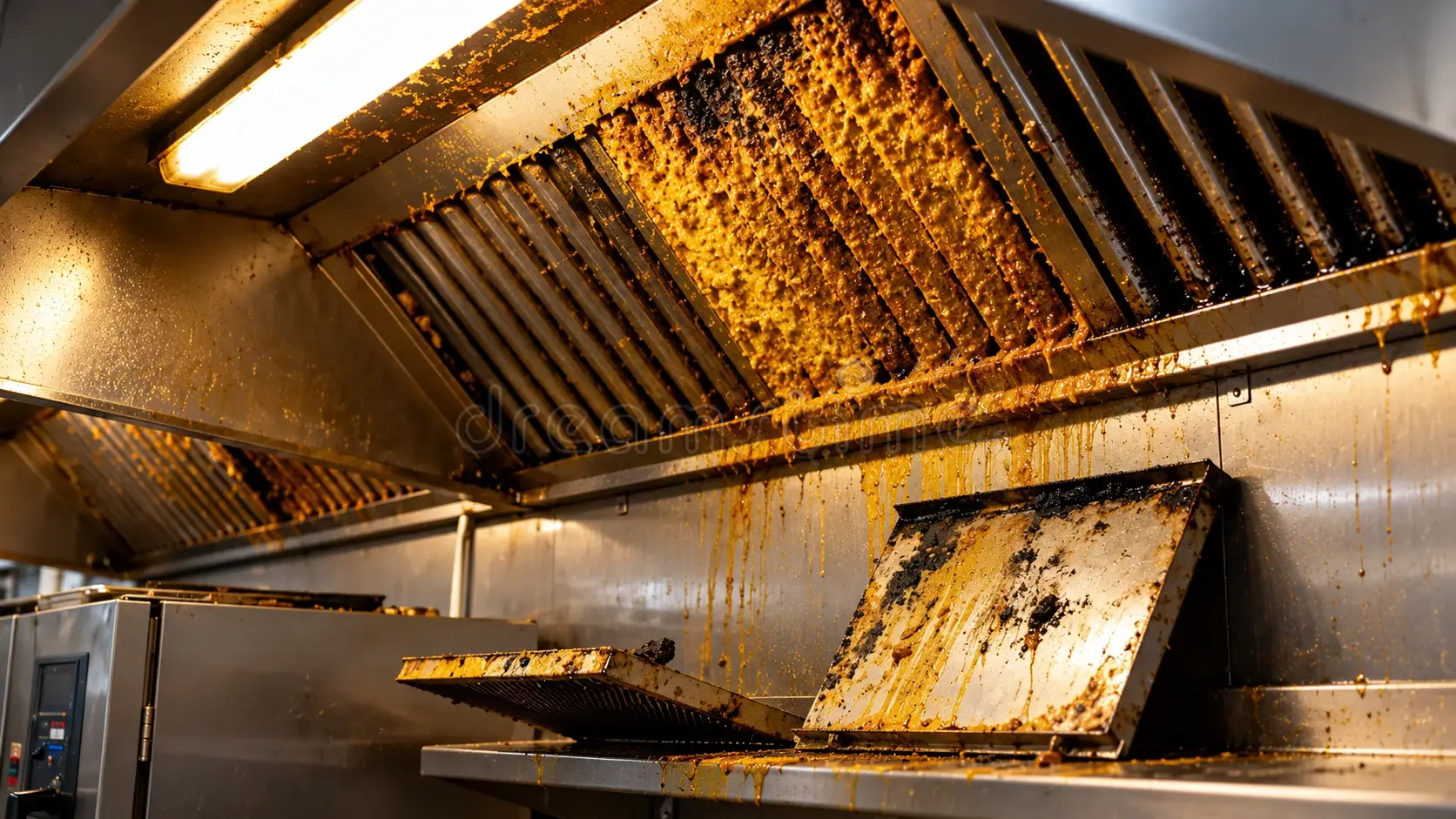
The operator hires a filter exchange vendor, pays the monthly bill, and assumes they’re covered. The filters get exchanged on schedule. The ductwork, hood plenum, exhaust fan, and rooftop discharge accumulate grease continuously with no professional service. Twelve months in, the system carries grease well past the Section 12.6.1.1 depth thresholds — not visible on a casual look, but present inside the ductwork and fan housing where fire spreads. The next fire marshal inspection finds it, and the kitchen faces a citation for missing documentation and out-of-compliance grease loading. See our guide on what happens after a failed fire marshal inspection for the deficiency-response process.
Pattern 2: Hood Cleaning Without Filter Maintenance
The operator schedules recurring professional hood cleanings, receives clean documentation each visit, and skips or under-performs filter cleaning between visits. Grease bypasses the filters and loads the ductwork faster than the professional interval anticipates. The Certified Technician arrives for the next scheduled visit and finds the system already past the depth threshold — the cleaning happens, but the operator’s system has been carrying dangerous grease loads for weeks. The next visit gets pulled forward. The professional cost per year goes up. And the fire risk between visits was higher than the compliance paperwork suggested.
The right pattern is both services running on their proper cadences: operator-side filter cleaning daily or weekly, and professional hood cleaning at the interval required by Table 12.4 for the kitchen’s cooking volume. Neither is optional. Neither substitutes for the other.
How Facilitec Southwest Handles the Boundary
Facilitec Southwest provides Certified Kitchen Exhaust Cleaning under NFPA 96 Section 12.6.1, performed by Phil Ackland Certified Technicians who are named on every service label and every written report per Section 12.6.13.1. That’s the professional service the standard requires and what we’ve delivered to commercial cooking establishments across Texas, Oklahoma, Louisiana, New Mexico, and Arkansas since 1986. Every visit ends with the documentation chain a fire marshal will accept: the service label per Section 12.6.13, the access-panel tags per Section 12.6.10, and the written report per Section 12.6.15.
Filter cleaning is the operator’s responsibility under the standard — daily or weekly, depending on cooking volume. Facilitec Southwest offers filter cleaning and exchange as an optional add-on to the professional visit for operators who prefer to consolidate the work with a single provider. The add-on doesn’t change the underlying responsibility — filter maintenance still belongs to the equipment owner under NFPA 96 — but it does let operators outsource the operational burden if that’s the right choice for their kitchen.
The first walkthrough with every new customer covers both sides of the boundary. What the professional visit will cover, on what cadence, with what documentation. What the kitchen staff needs to keep doing between visits — filter cleaning, drip container inspection under Section 12.6.17, daily wipedowns. And which of those operator-side tasks the customer wants to delegate as add-ons versus keep in-house. The goal is a Grease-Free and Fire-Safe kitchen, From Cooktop to Rooftop, with the peace of mind that comes with a compliance file that holds up.
Frequently Asked Questions
What is the difference between hood cleaning and filter exchange?
Hood cleaning is the periodic professional service performed by a Certified Technician that addresses the entire kitchen exhaust system — hood interior and plenum, ductwork, exhaust fan, and rooftop discharge — cleaned to the depth thresholds in NFPA 96, Section 12.6.1.1. Filter exchange (or filter cleaning) is the daily and weekly operator-side work of removing, washing, and replacing the grease filters above the cookline. NFPA 96 makes filter maintenance the equipment owner’s responsibility, not the certified cleaning contractor’s.
Do I need both hood cleaning and filter exchange?
Yes. A commercial kitchen operating grease-producing cooking equipment needs both. Filter cleaning is a daily or weekly kitchen-staff task that keeps filters effective between professional service visits — dirty filters push more grease into the ductwork faster. Hood cleaning is the recurring professional service that addresses the ductwork, fan, and rooftop discharge on the schedule set by NFPA 96, Table 12.4. They are not substitutes for each other.
Is filter cleaning included in a hood cleaning?
Not by default under NFPA 96. Section 12.6.1 requires the certified cleaning contractor to clean the hood, ductwork, fan, and rooftop discharge. Filter maintenance is a separate operator-side responsibility. Facilitec Southwest offers filter cleaning or exchange as an optional add-on service — but the standard treats it as the kitchen operator’s obligation, not the contractor’s.
How often should grease filters be cleaned?
For most commercial kitchens, grease filters should be cleaned daily at end of service or at minimum weekly. High-volume operations (fryer-heavy menus, 24-hour kitchens, wok cooking, charbroiling) should clean filters daily. Moderate-volume sit-down restaurants can extend to weekly cleaning. NFPA 96, Section 12.1.2, prohibits operating the exhaust system with filters removed.
Can I skip filter cleaning if I get regular professional hood cleanings?
No. Skipping filter cleaning between professional visits allows grease to bypass the filters and load directly into the ductwork, hood plenum, and exhaust fan. That accelerates how quickly the system reaches the depth thresholds in NFPA 96, Section 12.6.1.1, and pushes the next required professional cleaning closer than the scheduled interval. Filter cleaning is the daily maintenance that makes the professional service interval hold.
What is a filter exchange program?
A filter exchange program is a service where a contractor drops off freshly cleaned grease filters and picks up the dirty set at a recurring interval, typically weekly or monthly. It’s an alternative to on-site filter cleaning by kitchen staff and shifts the operational burden without changing the underlying responsibility. Filter exchange programs do not satisfy the NFPA 96 hood cleaning requirement — they only address the filters.
Does Facilitec Southwest offer filter cleaning?
Yes, filter cleaning is available as an optional add-on to the professional NFPA 96 hood cleaning visit. Facilitec Southwest treats filter maintenance the way NFPA 96 does — as the equipment owner’s responsibility that operators can delegate through an add-on service, not as a substitute for the periodic exhaust system cleaning.
What happens if I only clean the filters and skip hood cleaning?
The ductwork, hood plenum, and exhaust fan continue accumulating grease past the depth thresholds NFPA 96 sets in Section 12.6.1.1, regardless of how clean the filters are. Filter cleaning alone doesn’t produce the service label, access-panel tags, or written cleaning report NFPA 96 requires, and a fire marshal inspection will cite the kitchen for missing documentation.
Sources and notes: NFPA 96, 2024 Edition — Section 6.1 (grease removal devices); Section 12.1.2 (no operation without filters); Section 12.1.4 (employee fire-safety training); Section 12.6.1 (qualified-person rule for cleaning); Section 12.6.1.1, 12.6.1.1.1, 12.6.1.1.3, 12.6.1.1.4 (grease-depth thresholds); Section 12.6.10 (access-panel service tag); Section 12.6.13, 12.6.13.1 (hood service label); Section 12.6.14 (fan inspection); Section 12.6.15 (two-week cleaning report); Section 12.6.17 (grease drip container weekly inspection); Table 12.4 (inspection frequency by cooking volume). IKECA references are to the International Kitchen Exhaust Cleaning Association’s CECS (Certified Exhaust Cleaning Specialist) and CECI (Certified Exhaust Cleaning Inspector) credentials. Phil Ackland Training is an internationally recognized training program for kitchen exhaust system inspection and cleaning. Operator cadence guidance reflects Facilitec Southwest field experience with commercial cooking establishments across the Southwest since 1986. Facilitec Southwest follows NFPA 96 guidelines for cleaning and inspection of grease buildup.